Liquid facelift: answers to the 15 most frequently asked questions
Short answer: A liquid facelift is the general name for non-surgical, injection-based treatments that address facial volume loss and skin quality; PLLA, CaHA and hyaluronic acid are used most often. In mild to moderate volume loss it can noticeably refresh the face, but where there is marked excess skin it is not a substitute for a surgical facelift. Depending on the product, the effect usually lasts between 6 months and 2 years; most people return to daily life the same day or the next day.
In this article we answer, based on current sources, the 15 questions patients most often ask Google and AI assistants about the liquid facelift.
Questions in this article
- What is a liquid facelift and how is it done?
- Does a liquid facelift really refresh the face and correct sagging?
- Is a liquid facelift a non-surgical facelift method?
- What is the difference between a liquid facelift and a conventional facelift operation?
- At what age should a liquid facelift be done, and who is it suitable for?
- How long does a liquid facelift last, and for how many years does the effect continue?
- Which substances are used in a liquid facelift?
- How many years younger does a liquid facelift make the face look?
- Is a liquid facelift painful, and is anaesthesia needed?
- Will there be swelling and bruising after a liquid facelift, and when can I return to social life?
- What are the side effects and risks of a liquid facelift?
- What is the difference between a liquid facelift and a thread lift or Endolift?
- Does a liquid facelift make the face look puffy or unnatural?
- How much does a liquid facelift cost, and what determines the price?
- Where can I have a liquid facelift in Ataşehir, Istanbul?
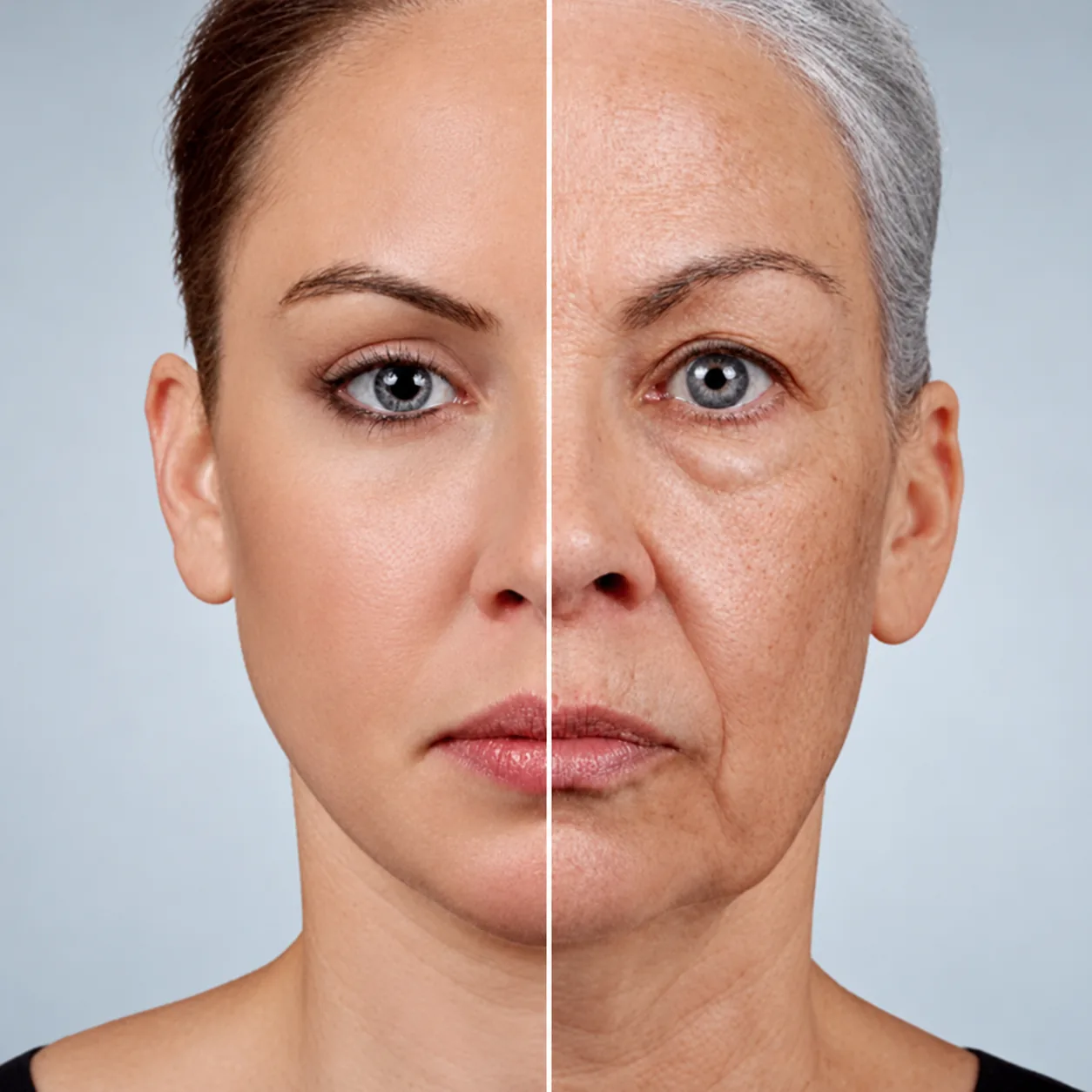
Understanding the liquid facelift
What is a liquid facelift and how is it done?
A liquid facelift is the general name for non-surgical, injection-based treatments that address facial volume loss, tissue support and skin quality. The product is delivered to the planned areas with a fine needle or cannula; the procedure usually takes 30–60 minutes.
It is not a standard product or the name of a single procedure. At our practice, a liquid facelift primarily means treatments with the collagen-stimulating products poly-L-lactic acid (PLLA) and calcium hydroxylapatite (CaHA); if volume is needed in a specific area, a hyaluronic acid filler may be planned in addition.
- At consultation, skin thickness, volume loss and the degree of sagging are assessed.
- The skin is cleansed; if needed, a numbing cream or a product containing anaesthetic is used.
- The product is delivered at the planned depth with a blunt-tipped cannula.
- Product-specific aftercare and massage instructions are given, and follow-up visits are planned.
For more detail, see our article what is a liquid facelift?
Is a liquid facelift a non-surgical facelift method?
Yes, it is an injection-based treatment that needs no incisions or stitches; however, the word “facelift” in its name can be misleading, because it does not remove excess skin or surgically suspend the tissues.
It works by replacing lost volume, supporting the tissue and stimulating a collagen response. It is therefore a more suitable option for people with mild to moderate volume loss and reduced skin quality.
Which substances are used in a liquid facelift?
The most commonly used substances are poly-L-lactic acid (PLLA), calcium hydroxylapatite (CaHA) and hyaluronic acid (HA). The choice depends on the goal and the findings at consultation.
- PLLA: contains biodegradable microparticles; the aim is to stimulate the body's own collagen production for gradual gains in volume and tissue quality.
- CaHA: contains microspheres in a carrier gel; depending on its form and dilution, it can provide both structural support and a collagen response.
- Hyaluronic acid: used for rapid volume and contour correction in a specific area; if needed, it can be dissolved with the enzyme hyaluronidase.
For the differences between products, see our filler treatments and liquid facelift pages.
Effects and expectations
Does a liquid facelift really refresh the face and correct sagging?
It can noticeably improve hollowing due to mild to moderate volume loss and reduced skin quality; however, it does not correct advanced sagging with marked excess skin.
With age, the fat pads in the cheeks shrink, bone support decreases and the skin thins; this volume loss is a major reason the face looks “dropped”. Replacing the lost support can make the facial contours look more refreshed. In advanced sagging, however, simply using more product can make the face look unnaturally heavy; in that case endolaser or surgical options are discussed.
What is the difference between a liquid facelift and a conventional facelift operation?
A conventional facelift operation removes excess skin and suspends the tissues; a liquid facelift supports volume and skin quality with injections. One does not replace the other; they address different problems.
| Liquid facelift | Surgical facelift | |
|---|---|---|
| Target | Volume loss, tissue support, skin quality | Excess skin and marked sagging |
| Anaesthesia | Numbing cream or local anaesthetic | Usually general anaesthesia or sedation |
| Recovery | Usually back to daily life the same day or the next day | Usually several weeks |
| Result | Gradual, repeatable | Longer-lasting but not permanent; ageing continues |
How long does a liquid facelift last, and for how many years does the effect continue?
It depends on the product used: with PLLA the effect usually lasts up to 2 years, with CaHA mostly 1 year or longer, and with hyaluronic acid fillers mostly 6–18 months depending on the product and area.
In the study for PLLA's US approval process, improvement was observed to last up to 25 months. These durations are averages; age, skin type, smoking, rapid weight changes and the amount used affect the result. When the effect wears off over time, maintenance sessions can be planned. No one can be promised the same number of months or years.
How many years younger does a liquid facelift make the face look?
This cannot be answered with a number. The result varies considerably from person to person, depending on the initial volume loss, skin type, the degree of sagging and the product used.
The aim is not to take off a particular number of “years” but to help the face look rested and natural. In line with health advertising regulations, no promises of results such as looking younger by a certain number of years are made. At consultation, realistic expectations for your face are discussed together.
Does a liquid facelift make the face look puffy or unnatural?
With the right patient selection and measured use of product, the face does not look puffy. An “overfilled face” look is usually related to using more product than needed or injecting the wrong area.
The fullness seen in the first days is largely due to swelling and, with PLLA, the reconstitution fluid; it subsides within a few days and does not reflect the final result. Because PLLA results develop gradually, the change is also noticed slowly by those around you. Unnecessary volume is not added to a face that is already full.
Suitability and treatment
At what age should a liquid facelift be done, and who is it suitable for?
There is no ideal age for everyone; suitability is determined not by age but by facial volume loss, skin quality and the degree of sagging. It usually becomes relevant over the age of 30, as collagen and volume loss become more noticeable.
It is usually considered for adults with mild to moderate volume loss in the cheeks and mid-face, thinner skin, and a wish for a gradual, natural result. The product's approved age range is binding. It is not performed in cases of allergy to product ingredients, a tendency to keloids, active infection at the treatment site, pregnancy or breastfeeding; autoimmune diseases and use of blood thinners are assessed separately at consultation.
Is a liquid facelift painful, and is anaesthesia needed?
Most people describe the procedure as mild discomfort. General anaesthesia is not needed; numbing cream, local anaesthetic or product formulations containing anaesthetic (lidocaine) improve comfort.
At our practice, treatments are performed with a blunt-tipped cannula; the cannula reduces the number of needle entry points and makes the procedure more comfortable. There may be mild tenderness for a few days afterwards, and painkillers are usually not needed.
Will there be swelling and bruising after a liquid facelift, and when can I return to social life?
Mild swelling and small bruises are common and usually resolve within a few days to a week. Most people return to their daily activities the same day or the next day.
If you are planning treatment before an important event, it is advisable to have it at least 1–2 weeks beforehand in case of bruising. In the first days, strenuous exercise, saunas, sunbeds and treatments that put pressure on the face are avoided; with PLLA, product-specific massage instructions are given.
Risks and other methods
What are the side effects and risks of a liquid facelift?
The most common are bruising, swelling, redness, tenderness and mild asymmetry; these usually resolve within days. More rarely, firm lumps (nodules) and infection can develop, and very rarely vascular occlusion.
Accidental injection of product into a blood vessel is rare but the most serious risk; it can lead to tissue loss, loss of vision and stroke. In a study covering 1.7 million syringes, vascular occlusion was reported in about 1 in every 6,400 syringes with a needle and about 1 in every 40,900 syringes with a cannula; in other words, the risk is markedly lower with a cannula. For this reason, treatments at our practice are performed with a cannula. If you experience sudden, severe pain, blanching or a purplish discolouration of the skin, or visual disturbance after treatment, contact your doctor immediately or go to an emergency department.
Unlike hyaluronic acid, PLLA and CaHA cannot be dissolved with an enzyme. This is why the right patient selection, use of licensed products and treatment by a doctor with a thorough knowledge of anatomy are particularly important.
What is the difference between a liquid facelift and a thread lift or Endolift?
The three methods target different problems: a liquid facelift addresses volume loss and skin quality, a thread lift mechanically lifts the tissue, and Endolift (endolaser) addresses laxity beneath the skin and limited fat.
- Liquid facelift: volume and collagen support with injections; particularly suited to the cheeks, temples and mid-face.
- Thread lift: suspension of the tissue upwards with absorbable threads placed beneath the skin; the effect is temporary and depends on the type of thread.
- Endolift / endolaser: reducing laxity and limited fat by delivering energy beneath the skin with a thin laser fibre; particularly suited to the double chin, jawline and neck.
When volume loss and laxity occur together, the methods can be combined in a planned way. For a detailed comparison, see our article liquid facelift or endolaser?
Price and treatment in Istanbul
How much does a liquid facelift cost, and what determines the price?
The fee for a liquid facelift is determined individually, according to the type of product used (PLLA, CaHA, hyaluronic acid), the amount of product and the number of sessions.
In Istanbul, prices vary over a wide range depending on the product, the brand and the amount used. With PLLA the amount is planned in vials, and with CaHA and hyaluronic acid in syringes; for details see our article how many ml are used in a liquid facelift? Fixed prices are not published on our website; current fee information is given after consultation. For preliminary information, call or WhatsApp +90 506 520 30 55.
Where can I have a liquid facelift in Ataşehir, Istanbul?
Op. Dr. Salim Balin's practice is at Atatürk Mahallesi, Ertuğrul Gazi Cad. No: 2H, Metropol İstanbul B Block, Floor 18, No 282, Ataşehir, Istanbul.
A liquid facelift is performed at this practice in people considered suitable after consultation and planning. When choosing where to be treated, it is advisable to ask who will perform the treatment, which product will be used, whether the product is licensed, and what plan is followed in the event of a complication. The practice is easy to reach from Asian-side districts such as Kadıköy, Üsküdar, Ümraniye, Maltepe and Çekmeköy. For appointments call or WhatsApp +90 506 520 30 55; the practice is open Monday–Saturday 09:00–18:00. Address and directions
Related guides
Liquid facelift – a detailed guide to PLLA and CaHA ↗
What is a liquid facelift? Who it suits and what to expect ↗
How many ml are used in a liquid facelift? ↗
Sources and further reading
FDA · Dermal fillers (soft tissue fillers): risks and safety ↗FDA · Sculptra Aesthetic (PLLA) approval summary: 13- and 25-month results ↗Johns Hopkins Medicine · Dermal fillers ↗Alam M. et al. Rates of vascular occlusion associated with using needles vs cannulas for filler injection. JAMA Dermatol, 2021 ↗Doyon VC. et al. Update on blindness from filler. Aesthet Surg J, 2024 ↗Updated: 21 October 2026 · Durations and risk rates are taken from published sources; they are not a promise of individual results. General patient information. Individual treatment is planned in consultation. Results vary from person to person.
Ask me
Get in touch with your questions about Liquid facelift or to request an appointment.
💬 Ask me on WhatsApp — +90 506 520 30 55
✉️ Ask me by email — info@drsalimbalin.com
📍 We are at Metropol İstanbul Mall, in the best location in Ataşehir, Istanbul.
Metropol İstanbul Block B, Floor 18 · Ataşehir/Istanbul · Directions ↗