



Content responsibility: Op. Dr. Salim Balin · Updated: 2026-10-17
What is endolaser?
Endolaser is a minimally invasive technique delivering laser energy beneath the skin through a fine optical fibre. It may be planned to improve skin laxity and limited local fat deposits. Unlike an open lift, it does not involve long incisions, but small access points and aftercare are still required. Local anaesthesia is commonly used.
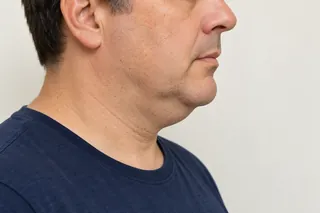
It may be considered for adults with mild-to-moderate laxity and limited fat under the chin, along the jawline, on the neck or in selected body areas. It is not a general weight-loss treatment or equivalent to surgical lifting for advanced laxity.
At our Ataşehir practice, general surgeon Op. Dr. Salim Balin plans treatment after assessing the skin, fat distribution and relevant nerve and vascular anatomy.
How does endolaser work?
Laser energy produces controlled heating beneath the skin. The aims include connective-tissue contraction, gradual collagen remodelling and, depending on technique, reduced local fat. Response depends on the device, settings, area and starting condition.
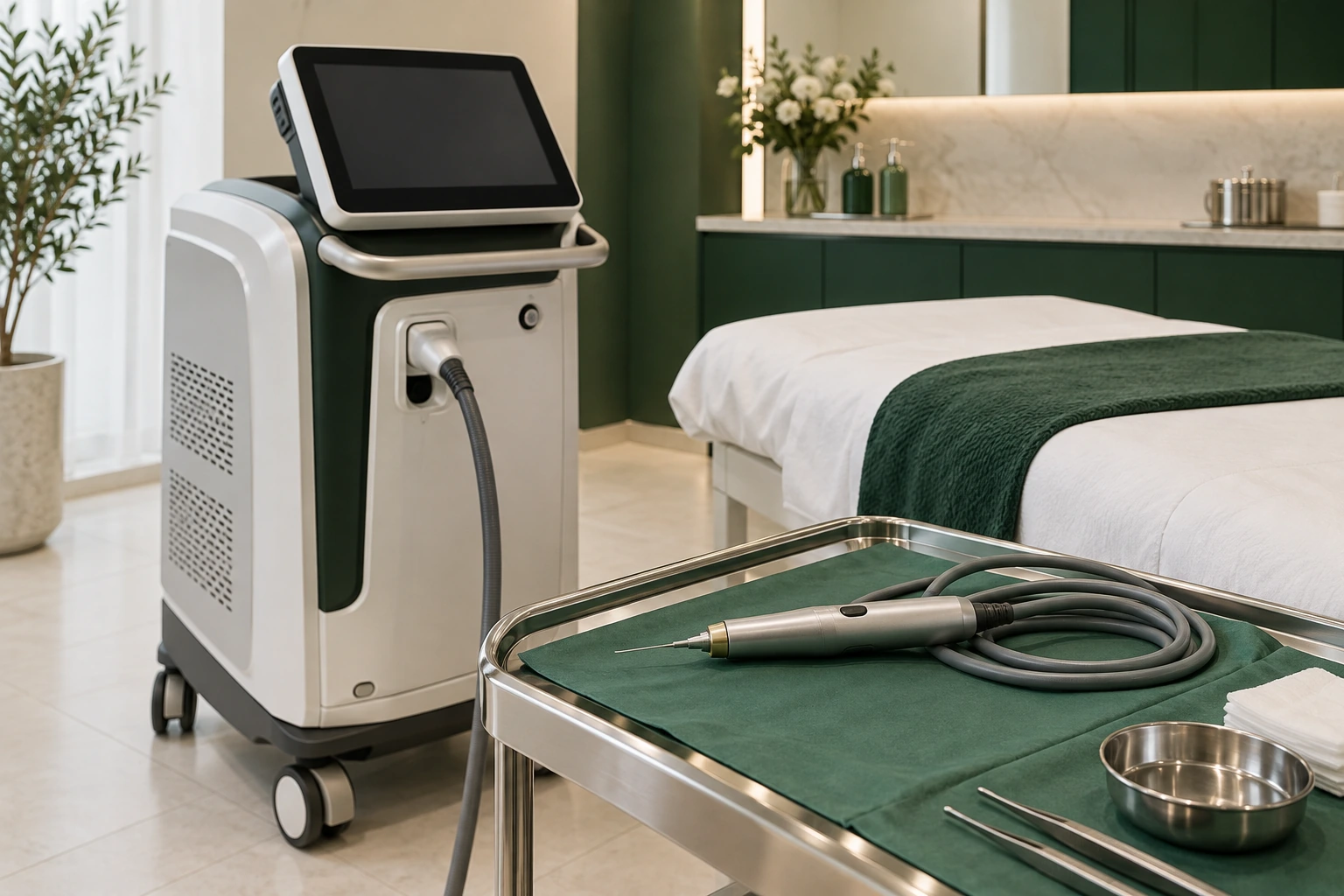
Published reports describe systems such as 1470 nm diode lasers and fine fibres in the 200–400 micrometre range. These are examples from specific systems in the literature, not a statement of this practice’s device specifications. The proposed equipment, fibre and technique are explained before treatment.
Skin-temperature monitoring and equipment-appropriate protection are important. Endolaser does not necessarily remove fat by suction as conventional liposuction does. Adding aspiration changes the procedure’s scope and recovery.
- Subdermal access: A fine fibre is introduced through a small entry point. This differs from laser treatment delivered only from the skin surface.
- Fat effects: Suitable techniques can aim for thermal disruption of fat cells followed by tissue remodelling. The amount of reduction cannot be assumed to be the same for everyone.
- Connective tissue: Heating may produce some early contraction, although swelling also affects the initial appearance.
- Collagen remodelling: Tissue changes may continue for months, so assessment should not rely solely on the appearance immediately after treatment.
Which areas may be treated?
Endolaser is often assessed for the lower face and neck. Body treatments require separate selection of device, technique and aim. Planning and recovery differ by area. The links below lead to area-specific guides.
| Area | Concern assessed | Related guide |
|---|---|---|
| Under-chin area, jawline and lower face | Local fat, mild laxity and contour | Laser chin contouring ↗ |
| Neck | Skin laxity and horizontal lines | Neck endolaser ↗ |
| Abdomen and waist | Limited local fat and contour | Abdominal and waist laser lipolysis ↗ |
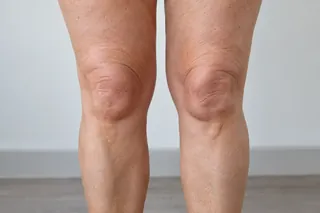
| Above the knees | Mild wrinkling and laxity | Laser treatment above the knees ↗ |
| Buttocks and hips | Selected local contour concerns | Laser buttock contouring ↗ |
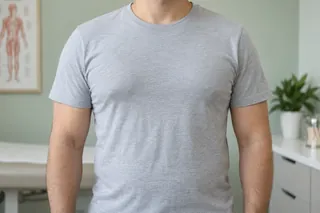
| Male chest | Selected fat-predominant gynecomastia | Gynecomastia and laser-assisted options ↗ |
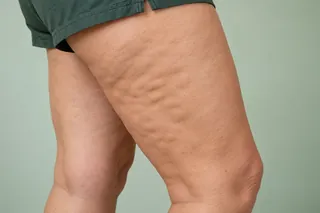
| Cellulite appearance | Texture changes requiring technique-specific assessment | Laser cellulite treatment ↗ |
Other areas, including inner arms, back and cheeks, may be assessed in consultation. Listing an area does not establish suitability for everyone or an equal level of evidence across areas.
Who may be suitable?
Adults with mild-to-moderate laxity, limited fat and relatively preserved skin elasticity may be assessed. Age alone does not decide suitability: excess skin, fat distribution, health and expectations all matter.
- People with stable weight but persistent local fat despite dietary and activity measures.
- People with early laxity under the chin, along the jawline or on the neck.
- People who do not need surgical correction or would accept a limited improvement.
- Selected patients seeking minor refinements after liposuction or lifting surgery.
- People with realistic expectations who understand that results develop gradually and further treatment may be needed.

When is treatment unsuitable or not recommended?
This elective procedure is avoided in certain circumstances; in others, a different approach may be more suitable. Conditions, medicines and previous procedures are reviewed in detail.
- Pregnancy and breastfeeding.
- Active infection, significant acne flare or open wounds in the treatment area.
- Uncontrolled diabetes or systemic disease, bleeding disorders or significant wound-healing problems.
- Warfarin or other anticoagulants: treatment while taking these medicines is not recommended in this clinic pathway. Do not stop them independently; any plan requires coordination with the prescriber.
- Recent fillers, especially permanent fillers, or active autoimmune skin disease at the site require further assessment.
- Marked excess skin and advanced laxity may be better addressed surgically.
- General excess weight: endolaser is not a weight-loss treatment; weight management may need to come first.
A double-chin appearance is not always caused by fat. Fullness due to salivary glands, muscle bands or jaw structure should not be expected to respond in the same way. Examination distinguishes these causes.
Treatment day: how is endolaser performed?
Limited areas may be treated as an outpatient under local anaesthesia. A small area may take about 30–60 minutes; treatment extent, preparation, anaesthesia and added aspiration can increase the total time. The setting and duration are explained for the individual plan.
- Consultation: Skin quality, fat and laxity are assessed alongside medicines and medical history. Necessary clinical records follow consent and privacy requirements.
- Preparation: The area is cleaned and treatment zones and access points are marked.
- Local anaesthesia: Numbing is provided. Pressure or mild warmth may be felt; report significant pain or burning immediately.
- Laser treatment: A fine fibre is introduced through a small access point. Energy delivery, tissue response and temperature are monitored with appropriate precautions.
- Aspiration when indicated: If discussed beforehand, removal with a fine cannula may be added. This differs in scope from fibre treatment alone.
- Completion: Access points are checked and dressed. Most small entry points do not require stitches. Compression, aftercare and follow-up are tailored; suitable patients may go home the same day.
Recovery and when results may appear
Some early contraction may be noticed, although swelling affects the initial appearance. Changes from collagen remodelling may develop over three to six months. This timeline is approximate and varies between patients.
Avoid strenuous exercise, saunas, steam rooms and excessive heat initially; agree when to resume with your clinician. Sun protection, access-site care and follow-up matter. Added aspiration, larger areas or sedation may require longer recovery.
Maintenance depends on age, skin quality, technique and weight stability. Fat reduction does not guarantee that the area will never gain fat again; weight gain can enlarge remaining fat tissue and natural ageing continues.
- First one to three days: Swelling, tenderness and mild bruising may occur. After limited treatment, light activities may resume the same or following day; compression or swelling can require a one-to-two-day pause.
- First week: Swelling may begin to settle. Facial or body compression is used only as directed for the specified duration.
- Weeks two to four: Bruising and swelling commonly subside. Firmness or altered sensation may persist; persistent or worsening symptoms require review.
- Months one to three: Contour changes and tissue response may become more apparent.
- Months three to six: The result is assessed clinically, with further options discussed if needed.
Risks and possible adverse effects
Endolaser is a medical intervention and is not risk-free. Experience, patient selection and safety measures aim to reduce risk, not eliminate it.
- Often temporary symptoms: Swelling, redness, bruising, tenderness, firmness or numbness.
- Other possible complications: Burns, access-site scars, infection, contour irregularities and fluid collections.
- Area-specific risks: Nerve injury around the lower face or jawline can cause smile asymmetry or weakness. Some cases are temporary, but persistent injury cannot be excluded.
Appropriate energy settings, anatomical technique, temperature monitoring and follow-up contribute to safety. Small studies cannot reliably exclude uncommon complications.
Which symptoms require prompt medical review?
Contact your treatment team without waiting for your scheduled review if you develop:
- Increasing or unexpectedly severe pain and swelling.
- Fever, marked redness or discharge from an entry point.
- Blistering, dark skin discolouration or an open wound.
- New marked facial asymmetry, weakness or worsening sensory loss.
Endolaser, liposuction or lifting surgery?
The choice depends on fat volume, excess skin and degree of laxity. Surgical alternatives should be discussed when endolaser is unlikely to be sufficient. This is a general comparison, not a personal recommendation.
| Feature | Endolaser | Liposuction | Lifting surgery |
|---|---|---|---|
| Potentially suitable concern | Mild-to-moderate laxity, limited fat | More substantial local fat | Advanced laxity and excess skin |
| Access / incision | Small fibre access points | Small incisions | Longer incisions and scars |
| Anaesthesia | Often local | Local or general | Often general; varies by procedure |
| Skin tightening | Limited, individual response | Depends on technique and elasticity | Lifting with removal of excess skin |
| Light work | Same day to one–two days; may be longer | About one week; varies | About two–three weeks; varies |
| Result assessment | Often three–six months | Over months as swelling settles | Over months as healing progresses |
Aspiration and laser may be combined in selected cases. Combined procedures do not have the same recovery or risk profile as fibre laser treatment alone.
Scientific evidence and realistic expectations
Although published reports describe encouraging findings, much of the evidence involves small samples, short follow-up and limited comparisons. The same efficacy or durability cannot be assumed across areas, devices and techniques.
The 2024 horizontal-neck-line study by Nilforoushzadeh and colleagues assessed ten participants and reported improvements in some measurements at three months after one treatment. Its small sample and lack of a control group limit generalisation and long-term safety conclusions.
This treatment may be known by different names; “endolaser” is the general term for fibre-delivered subdermal laser treatment. Different devices and techniques are not equivalent; the proposed system is explained in consultation.
Frequently asked questions
Are endolaser, endolift and needle laser the same thing?
Endolaser is a general term for fibre-delivered subdermal laser treatment. These names are often used for the same approach. Devices, wavelengths and techniques should not be treated as equivalent; the proposed system is explained in consultation.
Is endolaser painful?
Local anaesthesia provides pain control. Pressure or mild warmth may be felt; report significant pain or burning immediately. Tenderness may last a few days afterwards.
Can one session be enough; how many are needed?
Selected patients may see the intended improvement develop after one session. Others may need additional sessions or another approach; results are not guaranteed. Nutrition, weight changes and regular activity also affect the course and maintenance of results.
How long do results last?
Duration depends on the starting condition, technique, age and weight changes. Ageing continues and weight gain can make local fat more noticeable again. There is no universal duration or guarantee of permanent results.
When can I return to work and exercise?
After limited treatment, light work may resume the same or following day. Compression or swelling may require a one-to-two-day pause. Larger areas, aspiration, sedation or heavy work can need longer recovery. Strenuous exercise is often reassessed after one to two weeks or later; follow your personal instructions.
Does endolaser cause weight loss?
No. The aim is limited local contouring and laxity improvement. General weight loss requires a separate weight-management assessment.
Can treatment be performed in any season?
For suitable patients, treatment can be planned at different times of year. Follow advice on sun protection, aftercare and heat exposure.
Is it the same as open lifting surgery?
No. Endolaser is performed through small access points; it is not equivalent to removing skin or extensive open lifting. Significant excess skin may be better addressed surgically.
Endolaser cost in Istanbul, Turkey (2026): what determines the price?
Pricing for endolaser in Istanbul depends on the treatment area, the technique, the number of sessions needed and the findings at examination, so a fixed price is not published on this site. Up-to-date 2026 pricing is provided after your consultation; for preliminary information you can contact us by phone or WhatsApp.
Let’s discuss the option suited to you.
WhatsAppChat on WhatsAppSources and further reading
Nilforoushzadeh ve ark. (2024) — Horizontal neck wrinkles: 10-patient study ↗Laser-assisted lipolysis — clinical patient-selection study ↗ASPS — Liposuction recovery (aspirasyon eklenmesi halinde) ↗Updated: 17 October 2026 · General patient information. Suitability and individual treatment are determined in consultation.