
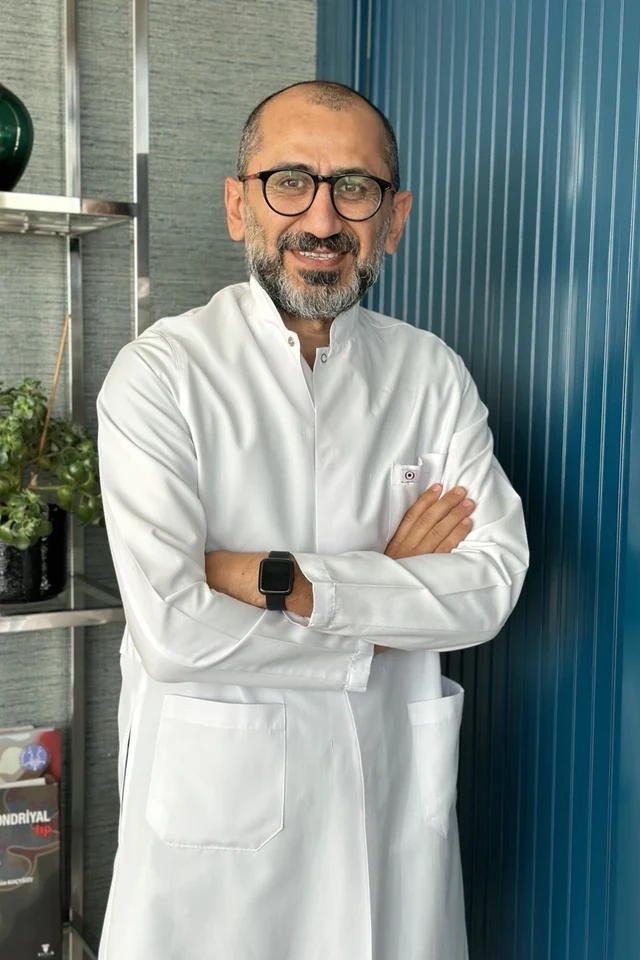
Content responsibility: Op. Dr. Salim Balin · Updated: 2026-10-16
What is Hashimoto’s thyroiditis?
Hashimoto’s thyroiditis is an autoimmune condition in which the immune system targets the thyroid. Inflammation may eventually lead to hypothyroidism, with fatigue, weight changes, cold intolerance, dry skin, hair loss and changes in concentration or mood.
- Standard treatmentWhen thyroid hormone deficiency is present, levothyroxine replaces the missing hormone; it does not directly eliminate the autoimmune process.
- Follow-up mattersElevated antibodies alone do not establish a need for thyroid medication or laser treatment. Decisions depend on thyroid function and individual clinical assessment.
What is low-level laser therapy?
Low-level laser therapy (LLLT), also called photobiomodulation, uses low-energy red or near-infrared light without intending to cut or burn tissue. It differs from thermal laser ablation used to shrink thyroid nodules.
- Proposed mechanismLight may interact with cellular structures including mitochondria and influence energy production and inflammatory responses. Proposed mechanisms do not establish a clinical benefit for every patient.
How is the treatment course planned?
The proposed clinic schedule is outlined below. It is not a universal or standard protocol shared by published trials. Suitability, device parameters and monitoring are determined individually by a physician.
- Overall courseA total of 6–8 sessions is planned within one week.
- Daily sessionsTwo sessions on treatment days, with a one-hour interval.
- Session durationEach session lasts approximately five minutes.
- Treatment areaThe anterior neck over the thyroid region is assessed for treatment.
- Comfort and daily activityPain, burning or noticeable heating is not expected. Report any discomfort to the physician. Daily activities can be resumed immediately afterwards.
Laser therapy for Hashimoto’s
Short video from Op. Dr. Salim Balin’s YouTube channel about laser therapy for Hashimoto’s thyroiditis (in Turkish).
Watch on YouTube ↗Considering IV vitamin support
Intravenous vitamin and mineral support is not a mandatory component of laser treatment. Any need is assessed separately based on health status, laboratory findings, identified deficiencies and oral treatment options.
- Individual decisionIf clinically indicated, it may be scheduled separately on the same day between sessions. The physician determines its content and duration.
- Realistic expectationsThere is insufficient clinical evidence that IV vitamins enhance laser effects in Hashimoto’s disease. Risks such as allergy, infection and fluid or electrolyte problems must also be assessed.
What does the research show?
Small placebo-controlled Brazilian studies have reported reduced levothyroxine requirements and Anti-TPO levels in some patients with autoimmune hypothyroidism. Longer-term follow-up has also been published. However, sample sizes are limited and protocols vary; findings cannot be generalised to everyone.
- Does not replace standard careLLLT is not an established standard treatment for Hashimoto’s disease in international guidelines. It should be considered an investigational adjunct; cure or stopping medication cannot be promised.
Who may be assessed?
Suitability is not determined by symptoms or elevated antibodies alone. Potential benefits, uncertainties and individual risks are discussed together.
- Confirmed diagnosisAdults with confirmed Hashimoto’s disease who receive regular thyroid monitoring and wish to discuss adjunctive options with their physician.
- Pre-treatment assessmentAssessment includes history, examination and current TSH and free T4. Anti-TPO and Anti-Tg are reviewed in the diagnostic context; repeatedly measuring antibodies is not routinely necessary. Ultrasound and nodule assessment are arranged as appropriate.
Who should avoid treatment or undergo further assessment?
In the following circumstances, treatment is not planned or requires prior specialist assessment. Share all medications and medical conditions with your physician.
- Suspicious nodules or cancer historySuspicious thyroid nodules or a cancer history require further assessment first; suspicious tissue is not treated.
- PregnancyNot recommended during pregnancy because adequate safety data are lacking.
- PhotosensitivityPhotosensitive conditions and medications that may cause photosensitivity require prior assessment.
- Active infectionTreatment is deferred until an active skin infection in the area has resolved.
Safety and follow-up
Appropriate equipment, dosing, eye protection and physician supervision are essential. Although small studies have reported acceptable tolerance, stronger evidence on long-term safety and effectiveness is needed.
- Do not change medication yourselfDo not stop levothyroxine or change its dose without your physician. Adjustments require clinical assessment and blood test results.
- MonitoringChanges are assessed at follow-ups scheduled over the following weeks to months. TSH and free T4 monitoring are tailored to the individual and medication plan.
Frequently asked questions
Is treatment painful?
Pain, burning or noticeable heating is not expected. Report any discomfort promptly.
How long does treatment take?
The proposed clinic schedule is 6–8 sessions within one week, with two sessions on treatment days, a one-hour interval and approximately five minutes per session. The plan may change after clinical assessment.
Why are two sessions planned on the same day?
This arrangement allows the proposed clinic course to be completed within a week. Two sessions per day have not been established as more effective than other schedules.
Why might IV vitamin therapy be used?
It is considered only for a separate clinical indication, after evaluating laboratory results, deficiencies and health status. It is not necessary for everyone and has not been proven to enhance laser effects.
Will I be able to stop medication?
This cannot be guaranteed. Some small trials reported reduced medication requirements, but many people with Hashimoto-related hypothyroidism need long-term hormone replacement. Only the treating physician can decide based on follow-up testing.
When are results assessed?
Possible changes in thyroid function are assessed at follow-ups over the next weeks to months. Not everyone will experience a change or clinical benefit.
Can it accompany other treatment?
It may be considered as an adjunct while continuing prescribed medication in suitable patients. All medications and other treatments must be disclosed in advance.
Hashimoto’s thyroid laser therapy cost in Istanbul, Turkey (2026): what determines the price?
Pricing for Hashimoto’s thyroid laser therapy in Istanbul depends on the treatment area, the technique, the number of sessions needed and the findings at examination, so a fixed price is not published on this site. Up-to-date 2026 pricing is provided after your consultation; for preliminary information you can contact us by phone or WhatsApp.
Let’s discuss the option suited to you.
WhatsAppChat on WhatsAppSources and further reading
American Thyroid Association — Hashimoto’s Thyroiditis ↗Höfling et al. — Randomised, placebo-controlled trial (2013) ↗Höfling et al. — Long-term follow-up (2018) ↗Clinical study — Photobiomodulation and levothyroxine (2024) ↗Updated: 16 October 2026 · General patient information. Individual treatment is planned in consultation.