

Content responsibility: Op. Dr. Salim Balin · Updated: 2026-10-16
What are exosomes?
Exosomes are tiny membrane-enclosed particles released by cells. They are often described as approximately 30–150 nanometres in size and belong to the extracellular vesicle (EV) family. Size measurements alone do not establish that particles in a product are exosomes.
Exosomes can be thought of as cellular message packages. Their molecular cargo can influence other cells. Some research investigates vesicles released by stem cells rather than transplanting the cells themselves, but not all exosomes originate from stem cells.
- Proteins and growth factorsCargo may include molecules involved in cell signalling.
- Nucleic acidsCargo may include regulatory molecules such as mRNA and microRNA.
- LipidsLipids form the membrane and may participate in signalling.
Exosomes are not living stem cells and do not replicate independently. Being cell-free does not establish that a product is risk-free or clinically effective.
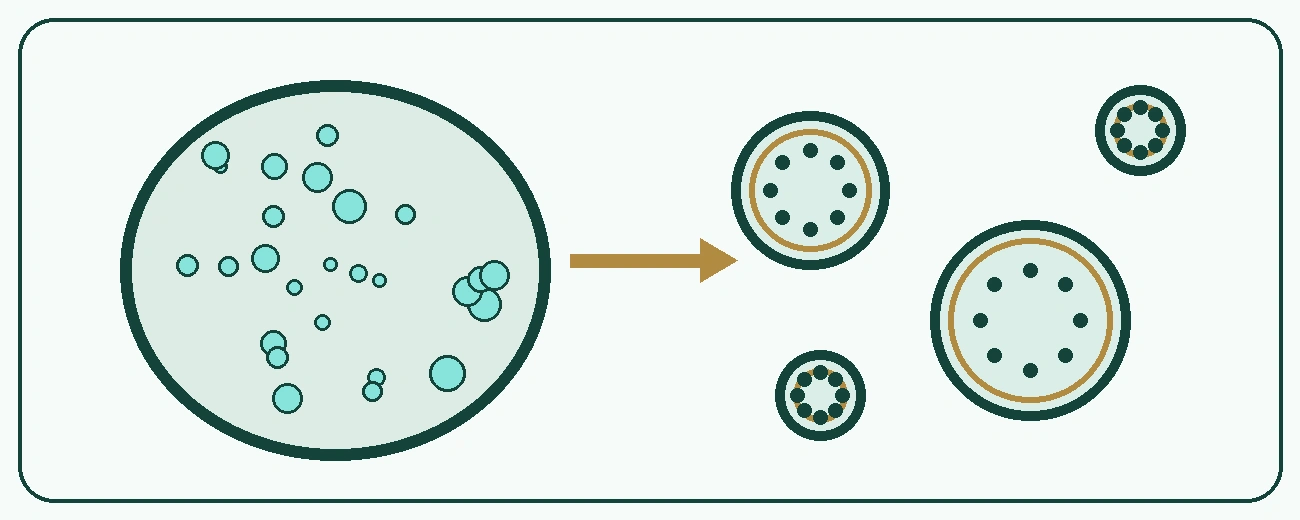
Sources of exosomes and related vesicles
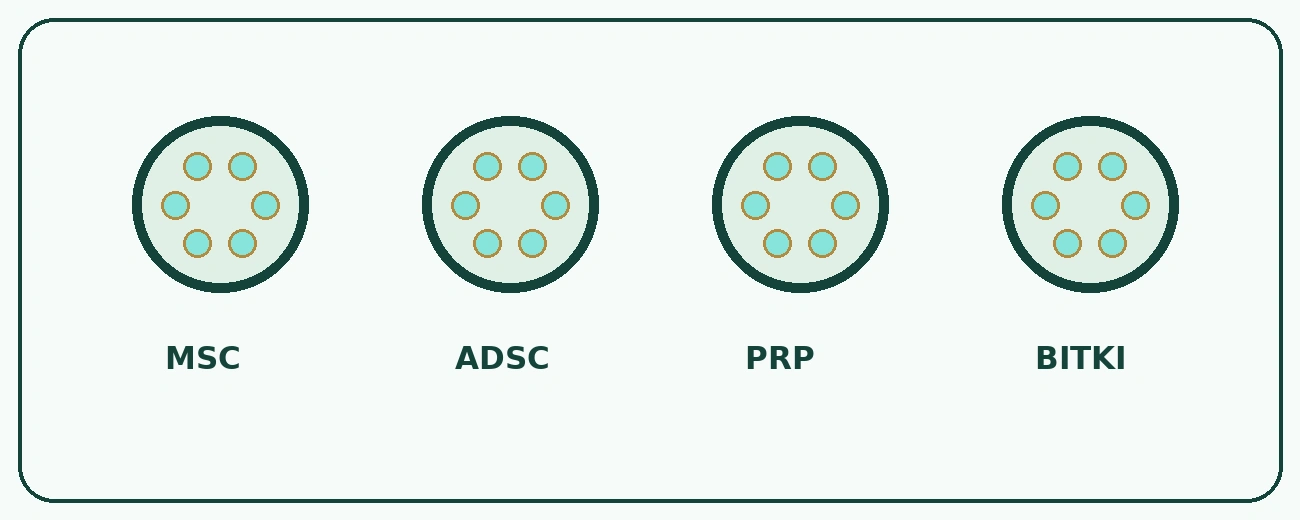
Vesicle characteristics depend on the source and production conditions. Autologous means originating from the same person; allogeneic means originating from another donor. Different sources cannot be assumed to be equivalent.
| Source | Origin | Research focus | Considerations |
|---|---|---|---|
| Umbilical cord / Wharton’s jelly MSC | Postnatal umbilical cord tissue | Cell signalling and repair pathways | Consent, donor screening and product characterisation |
| Adipose-derived MSC (ADSC) | Fat obtained through liposuction | Signals associated with skin and tissue repair | Donor and manufacturing conditions affect quality |
| Bone marrow MSC | Bone marrow sample | Regenerative medicine research | Source and separation method require documentation |
| Placenta / amnion | Postnatal placenta and membranes | Inflammatory responses and repair pathways | Donor safety and applicable authorisation |
| Platelet-derived vesicles | Autologous or donated blood | Platelet-associated signalling | PRP and purified EVs are not the same product |
| Plant-derived vesicles | Sources such as rose, grape, ginseng and centella | Research on exosome-like nanoparticles | Not equivalent to human MSC exosomes; phytosomes are a different concept |
| Microbial / milk-derived vesicles | Microorganisms or milk | Largely a research field | Clinical evidence is limited and product-specific |
An “exosome” label alone is insufficient. Source, manufacturer, composition, intended route and quality documentation require assessment.
How are exosomes obtained?
Production involves source selection, cell culture, collection, separation, quality control and storage. Products marketed under the same name can differ substantially because of differences at these stages.
- Source selection and donor screeningHuman-derived materials require informed consent and appropriate infection screening.
- Cell cultureVesicles released by appropriately cultured cells are collected from conditioned medium.
- Collection and preliminary processingCells, debris and larger particles are removed using appropriate methods.
- Separation and concentrationMethods include ultracentrifugation, tangential flow filtration (TFF), size-exclusion chromatography (SEC), precipitation and immunoaffinity. No single method is ideal for every sample.
- Characterisation and quality controlAssessment combines particle concentration, size distribution, structure, relevant markers, sterility and contamination testing. Certificates of analysis and batch information are reviewed.
- Formulation and storageLiquid and lyophilised formulations may exist. Storage, reconstitution and preparation must follow validated product instructions; no universal temperature or preparation rule applies.
ISEV’s MISEV recommendations support research quality and transparency; they do not grant a treatment licence or establish clinical efficacy.
Who may be assessed, and who should avoid treatment?
Assessment begins with the diagnosis, established treatment options and individual expectations. The following are areas of research and assessment, not automatic indications or a statement that any particular product is offered in this clinic.
- Skin qualityEarly studies examine dullness, fine lines, hydration, elasticity, pores and texture.
- Scars, pigmentation and post-procedure careResearch explores acne scars and use alongside some procedures; replacement of standard care has not been established.
- Hair lossStudies are ongoing in conditions such as androgenetic alopecia. The cause of hair loss must be established first.
- Situations requiring further assessment or deferralPregnancy, breastfeeding, active or recent cancer, autoimmune disease, immunosuppressive medication and ingredient allergy require particular consideration.
- Treatment area and bleeding riskActive infection, herpes, open wounds, inflamed lesions, bleeding disorders, anticoagulants and keloid tendency affect the plan. Do not stop medication yourself.
Work in orthopaedics, neurology, lung and cardiac repair is investigational. These topics should not be interpreted as routine, approved exosome treatment recommendations.
How are exosome products applied?
The route must be assessed against the product’s characteristics and authorised intended use. The approaches discussed in the document are summarised below; they are not appropriate or approved for every product.
The document’s example session includes cleansing, anaesthetic cream if appropriate, preparation according to product instructions, any planned accompanying procedure and aftercare. It gives approximately 45–60 minutes including preparation as an example; duration varies by procedure.
| Method | Approach | Important note |
|---|---|---|
| Microneedling plus topical product | Surface application alongside microneedling is being studied. | Topical registration alone does not establish suitability for application over microchannels. |
| Fractional laser plus topical product | Studies examine post-laser care and skin quality. | Use on a disrupted skin barrier requires separate verification. |
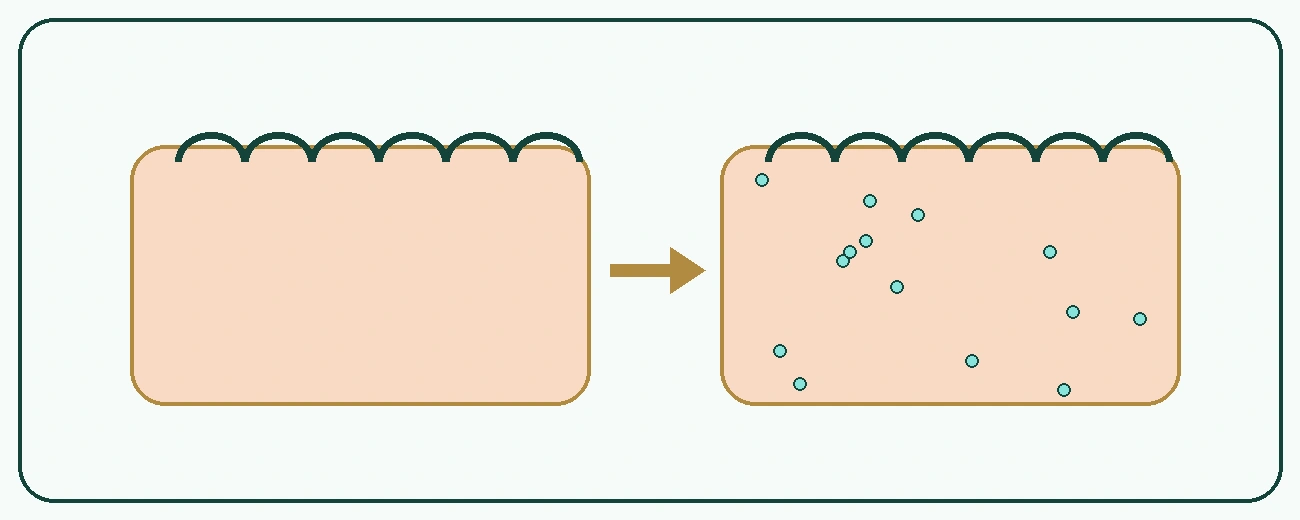
| Topical application alone | Surface application as a cream or serum. | Penetration through intact skin may be limited. |
| Intradermal injection | Injection approaches have been reported in some publications. | Topical cosmetics must not be injected; serious and delayed reactions have been reported. |
| Scalp | Different routes are being studied for hair loss. | Clinical data are limited; product and route require separate assessment. |
Topical use, application after microneedling and injection are different routes. Product authorisation and safety documentation must match the planned procedure.
What effects and treatment intervals are discussed?
Small studies report findings concerning skin texture, hydration, elasticity and pigmentation. Products, accompanying procedures and follow-up periods vary, so results cannot be generalised across products.
The 2025 split-face study mentioned in the document involved nine women. Small studies do not replace larger controlled research. Some observed changes may result from the accompanying microneedling or laser treatment.
- First daysRedness and sensitivity are monitored according to the accompanying procedure. Early radiance is not proof of a lasting exosome effect.
- 2–4 weeksSome protocols assess texture and hydration during this period; there is no universal timeline.
- 3–6 monthsLonger-term changes may be assessed with standardised photographs and clinical review. Outcomes are not guaranteed.
| Purpose | Example sessions | Example interval | Maintenance example |
|---|---|---|---|
| General skin quality | 3–4 sessions | 2–4 weeks | Every 4–6 months |
| Pores and texture | 3 sessions | 4 weeks | As assessed |
| Acne scars with laser | 3–6 sessions | 4–6 weeks | If indicated, 1–2 per year |
| Hair loss | 4–6 sessions | 2–4 weeks | Every 3–6 months |
These figures are examples from the source document. No universal validated session protocol applies to all exosome products and routes. These schedules should not be used without first establishing suitability.
Adverse effects, product safety and regulatory status
Redness, mild swelling, tenderness, dryness, flaking, itching and small bruises may occur; some arise from the accompanying microneedling or laser procedure. Product-related allergy and infection require separate consideration.
- Delayed reactionsInduration, red papules and nodules have been reported weeks or months after injection. New or persistent changes require medical assessment.
- Serious symptomsIncreasing pain, spreading redness, fever or skin discolouration require contact with the clinical team. Breathing difficulty or rapidly increasing facial or tongue swelling requires emergency assessment.
- Quality checksSource, manufacturer, batch, certificate of analysis, storage, sterility and suitability for the intended route must be checked.
- US regulationFDA publishes safety alerts about unapproved exosome products. FDA statements concern US regulation and do not establish authorisation in Türkiye.
- Türkiye and product-specific assessmentCosmetic notification is not equivalent to treatment approval or injection authorisation. Current Turkish requirements must be verified for the source, product type and intended use.
This information does not establish that a product is authorised or that all described procedures are offered by this clinic. Long-term safety and efficacy data are limited.
Frequently asked questions
Is exosome treatment stem cell therapy?
No. Exosomes are cell-released vesicles, not living cells, and do not replicate independently. Some originate from stem cells, but not all do.
How do exosomes differ from PRP?
PRP is platelet-rich plasma prepared from a person’s own blood. Exosome or EV preparations may contain vesicles separated from different sources. Composition and evidence differ; they are not interchangeable.
Is it painful?
Discomfort depends on the accompanying procedure. Anaesthetic cream may be considered for microneedling or laser treatment. The product and procedure must be explained in advance.
When can social activities resume?
After superficial microneedling, many people can resume light daily activities the next day. Redness may last several days after combined laser procedures. Timing depends on treatment extent.
What aftercare is discussed?
The document discusses avoiding makeup for 24 hours and sauna, steam baths, strenuous exercise and swimming for 48 hours, alongside sun protection and at least SPF 30 sunscreen. Restarting retinol and AHA/BHA products depends on healing and physician advice.
How should the product and procedure be assessed?
Ask about source, manufacturer, registration or authorisation, certificate of analysis, batch details and suitability for the intended route. Cosmetic registration is not injection authorisation.
Is the session schedule the same for everyone?
No. The document’s schedules are examples. There is no universal validated session standard across products and routes; suitability and planning require separate assessment.
Can definite results or risk-free treatment be promised?
No. Early findings cannot be extrapolated across products. Results vary, and consultation should explain limited long-term safety evidence and established alternatives.
Exosome treatment cost in Istanbul, Turkey (2026): what determines the price?
Pricing for exosome treatment in Istanbul depends on the treatment area, the technique, the number of sessions needed and the findings at examination, so a fixed price is not published on this site. Up-to-date 2026 pricing is provided after your consultation; for preliminary information you can contact us by phone or WhatsApp.
Let’s discuss the option suited to you.
WhatsAppChat on WhatsAppSources and further reading
ISEV — MISEV2023 scientific guidelines ↗Clinical study — Use combined with microneedling/laser (2025) ↗FDA — Safety notice on exosome products ↗Platinum Biologics — FDA warning letter (2025) ↗Report of a post-injection complication ↗Updated: 16 October 2026 · General patient information. Individual treatment is planned in consultation.