
Content responsibility: Op. Dr. Salim Balin · Updated: 2026-10-16
What is it and how is it assessed?
Pilonidal sinus is a set of tracts and associated inflammation in the tailbone area caused by hairs entering the skin. In laser treatment the tracts are cleaned and, in suitable patients, closed from the inside with a thin laser fibre.
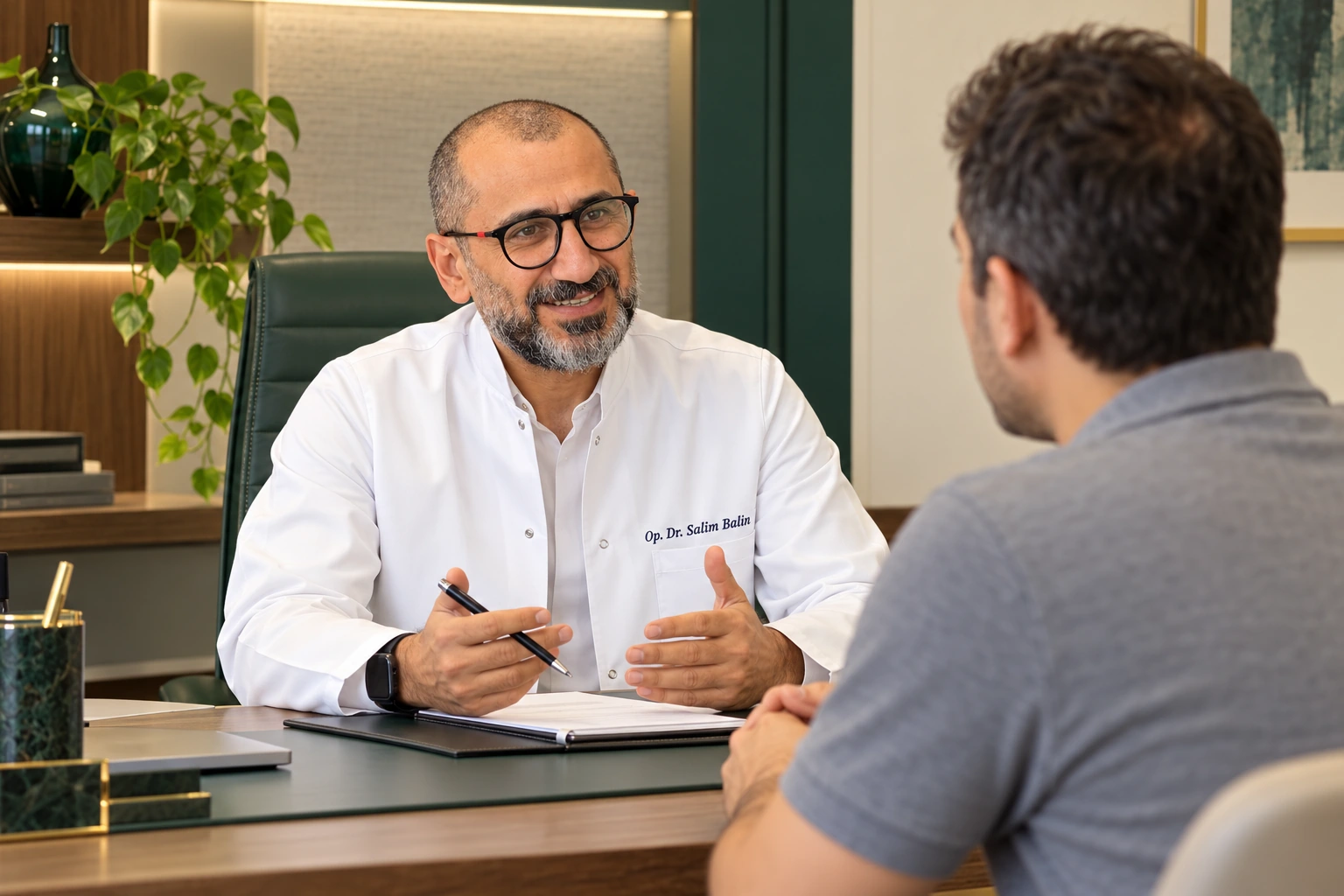
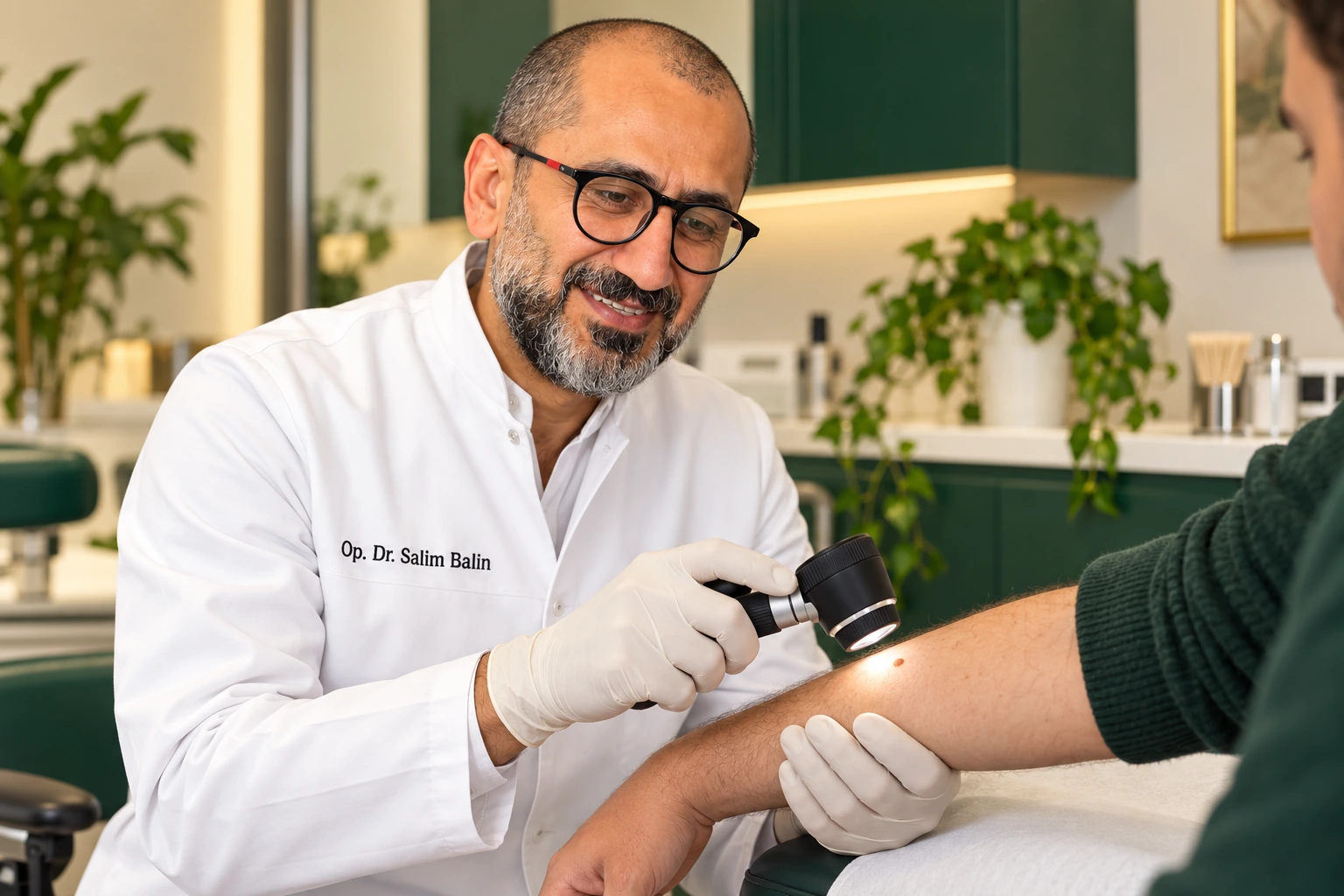
At consultation the number and position of the openings, any discharge, active inflammation and previous treatments are assessed.
Methods and treatment areas
Tracts associated with hair and inflammation in the natal cleft are assessed. Openings, tract extent and prior procedures inform selection. Laser tract treatment is not the same as laser hair removal.
Laser, phenol and surgery suit different patient groups:
| Method | When is it preferred? | Recovery |
|---|---|---|
| Laser closure | Patients with no previous surgery and no very extensive tracts who want to try laser as the first option | Small openings, little time off work |
| Phenol application | Early-stage disease with no previous surgery; can also be combined with laser | More than one session may be needed |
| Surgery | Mainly for recurrences, very extensive sinus openings, and cases where laser was tried before without success | Longer wound care |
Laser treatment for pilonidal sinus
Short video from Op. Dr. Salim Balin’s YouTube channel about laser treatment for pilonidal sinus (in Turkish).
Watch on YouTube ↗Laser pilonidal procedure
Short video from Op. Dr. Salim Balin’s YouTube channel about the laser procedure for pilonidal sinus (in Turkish).
Watch on YouTube ↗
What do I look for at the consultation?
Op. Dr. Salim Balin: For every patient with pilonidal disease, I decide at the consultation whether laser is suitable. For some patients the right option is not laser but abscess drainage, phenol or surgery. The assessment is made by examination; no additional tests are needed.
Four things I assess:
- Number and position of the openings: Laser is suitable for patients with no previous surgery and no very extensive tracts who want to try laser as the first option. In early-stage disease, phenol can be used alone or combined with laser. I recommend surgery mainly for recurrences, very extensive sinus openings, and cases where laser was tried before without success.
- Active inflammation: If there is a red, swollen, painful abscess, I postpone the laser. The abscess is treated first; the area is usually ready for the procedure about 1–2 weeks later.
- Previous treatments: If surgery, phenol or laser has been done before, I assess the scars and tracts separately.
- Extent of the tract: I assess the length and direction of the tract at examination.
When surgery comes first: recurrent disease; very extensive sinus openings; laser tried before without success.
Three common misconceptions:
- “Laser pilonidal treatment is laser hair removal”: It is not. One closes the tract from the inside, the other reduces hair; they complement each other.
- “Laser can be done straight away with an abscess”: The inflammation must settle first.
- “It never comes back after laser”: No method eliminates recurrence; aftercare and hair control matter.
Suitability and precautions
Assessed for patients with no previous surgery and no very extensive tracts who want to try laser as the first option. An acute abscess may require drainage first. Surgery comes first for recurrences, very extensive sinus openings and cases where laser has not worked before.
Laser can be tried as the first option in patients with no previous surgery, no very extensive tracts and no active abscess. In early-stage disease, phenol can be used alone or combined with laser. If there is an active abscess it is drained first and the inflammation is allowed to settle. Surgery comes first mainly for recurrences, very extensive sinus openings, and cases where laser was tried before without success.
Benefits and expectations
The aim is to choose the option that fits your condition. The expected benefit depends on tissue structure, the features of the disease and the method chosen.
- Advantages: Performed under local anaesthesia without a large incision; open-wound care is more limited than after surgery, and most people return to desk work within a few days.
- Expectations: The tract closes from the inside over several weeks, with possible light discharge in the meantime. Some patients need a second procedure.
- Limits: Surgery is recommended for recurrences, very extensive sinus openings and cases where laser has not worked before. No method eliminates the chance of recurrence.
Risks and aftercare
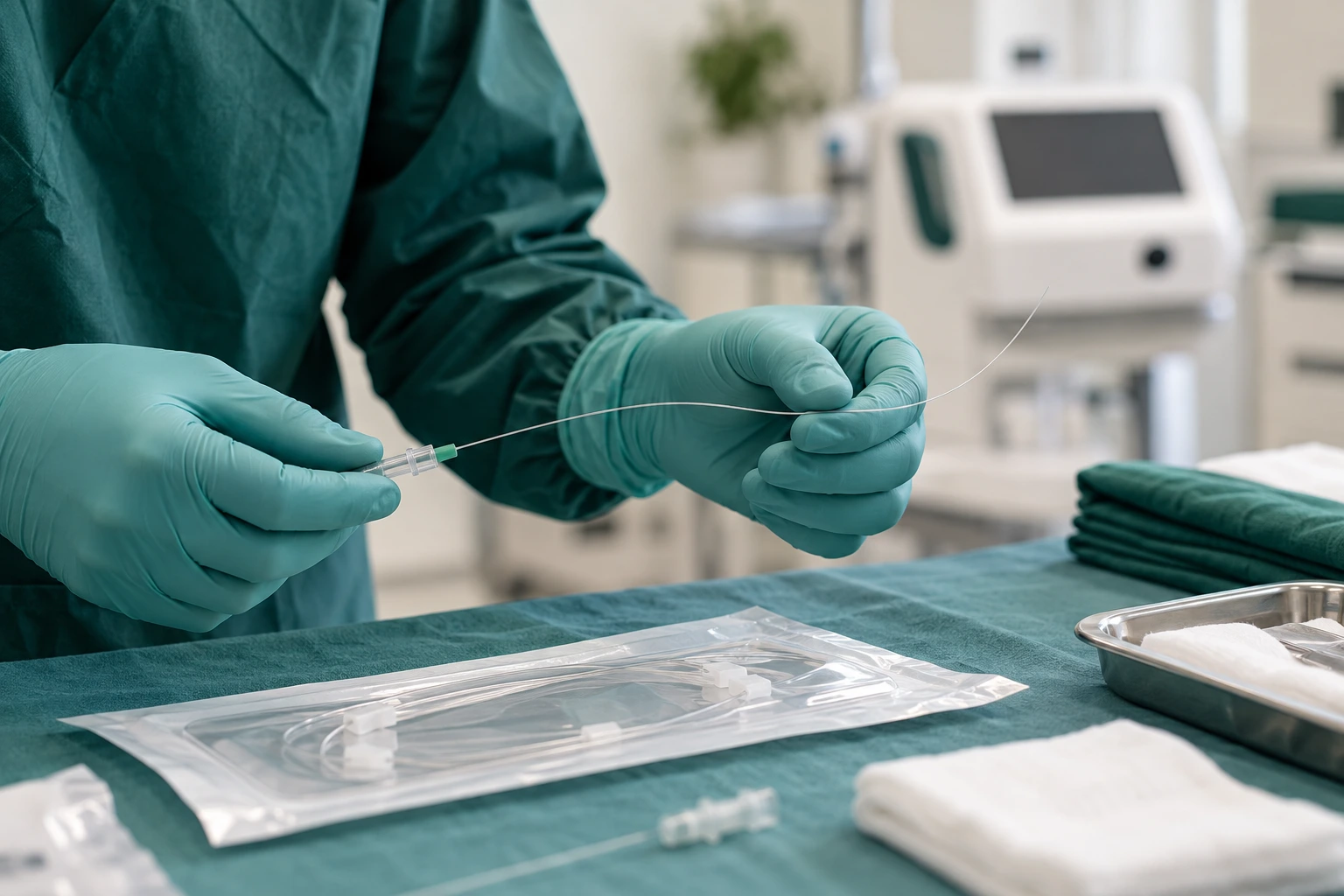
In suitable cases under local anaesthesia, tracts are cleaned and a laser fibre is used. Recovery varies; wound care and review are needed. Recurrence, persistent drainage, abscess and repeat intervention are possible. Next-day work or guaranteed one-session cure cannot be promised.
Daily dressing and keeping the area dry are advised in the first week. Check-ups are usually in the first week and the following weeks. If discharge does not decrease after several weeks, or swelling or pain returns, an earlier review is needed; depending on the cause, a second laser session or a different method is discussed. Reducing hair in the area helps lower the risk of recurrence.
Frequently asked questions
How many sessions or procedures?
It depends on diagnosis and method. One procedure may be sufficient, or follow-up and further treatment may be required.
What should I disclose beforehand?
Share medicines, allergies, previous procedures and health conditions. Do not stop prescribed medication yourself.
How long does recovery take?
It depends on the procedure and your health; aftercare and review are planned at consultation.
Laser pilonidal sinus treatment cost in Istanbul, Turkey (2026): what determines the price?
Pricing for laser pilonidal sinus treatment in Istanbul depends on the extent of the procedure, the technique, any hospital or anaesthesia requirements and the findings at examination, so a fixed price is not published on this site. Up-to-date 2026 pricing is provided after your consultation; for preliminary information you can contact us by phone or WhatsApp.
Let’s discuss the option suited to you.
WhatsAppChat on WhatsAppSources and further reading
NHS · Pilonidal sinus ↗SiLaC outcomes and factors affecting success — clinical study (2024) ↗Updated: 16 October 2026 · General patient information. Individual treatment is planned in consultation.