Tackling HPV in 5 Steps: A Wart and HPV Guide from Contact to Immunity
Short answer: Tackling HPV is a five-step process: reducing transmission, keeping the area clean without irritation, applying ozonated oil to the affected area once a day, treating visible warts and supporting the body’s resistance to the virus. Warts can usually be removed by laser in a single session; but because the virus can stay in the body, stopping transmission and supporting immunity matter as much as treatment.
What is HPV and how does it cause warts?
HPV (human papillomavirus) is one of the most common viral infections worldwide. In most people it passes without symptoms; in some it causes warts on the hands, soles, face or genital and anal area. About 90% of genital warts are caused by HPV types 6 and 11, which carry a low cancer risk.
The five steps below summarise the roadmap we explain to patients at consultation.
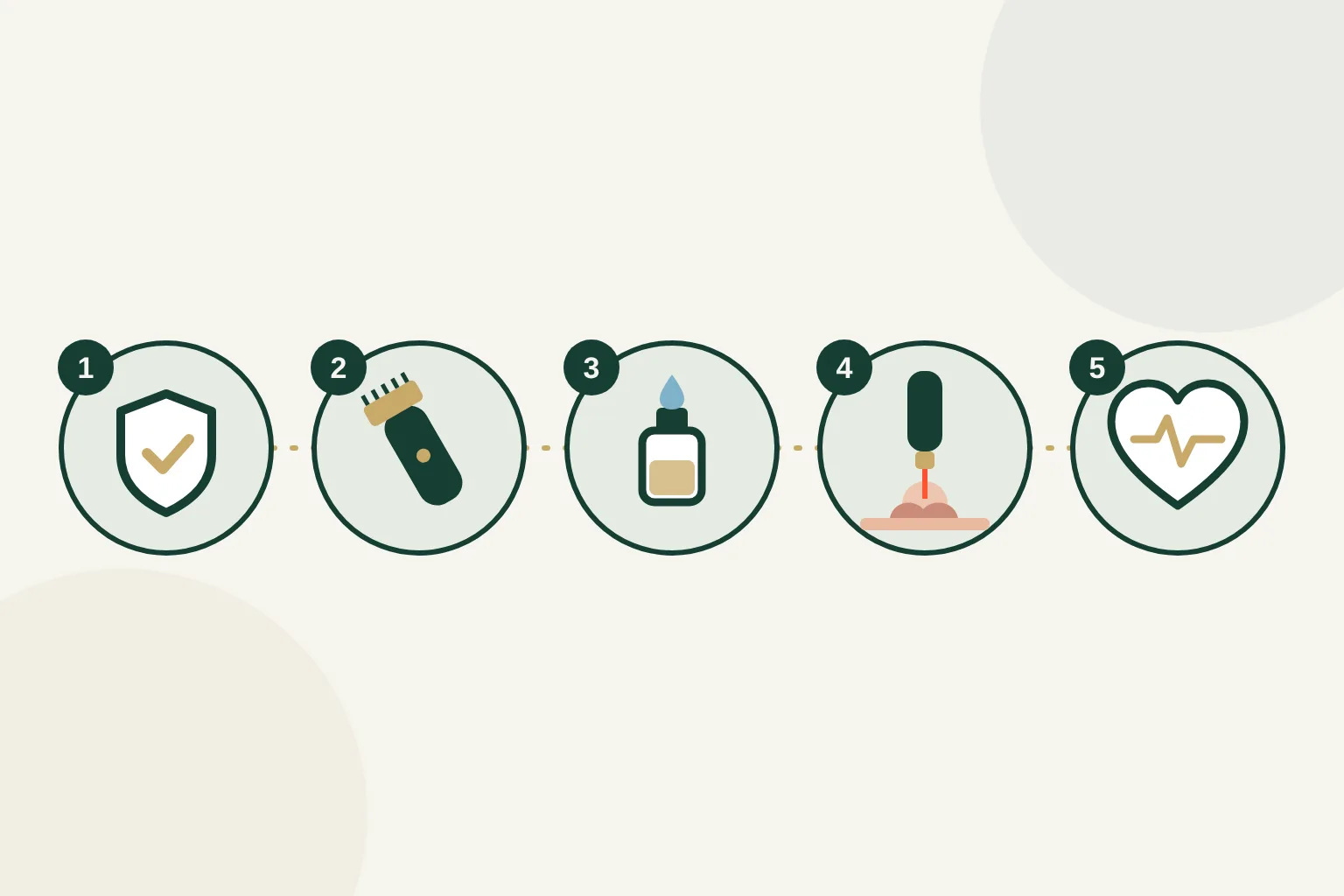
Step 1: Cut contact – how HPV spreads and how to prevent it
HPV spreads through direct contact with wart-affected skin. Reducing transmission protects your partner and stops the virus spreading to new areas of your body.
- Pause sexual contact until treatment is complete. Avoid sex while genital or anal warts are present and until the wound has healed after treatment.
- Use condoms. They lower the risk, but transmission is still possible through skin they do not cover, so the risk is not removed completely.
- Inform your partner. An examination for your partner, and screening for other sexually transmitted infections if needed, is recommended.
- Do not share personal items. Towels, razors and slippers can make spread easier, especially for hand and foot warts.
- Keep feet dry. Wear slippers in pools, saunas and shared showers.
Step 2: Take care with intimate hygiene – a clipper instead of a razor
Anything that cuts or makes the skin bleed in a wart-affected area can carry the virus to surrounding skin and lead to new warts.
- Use a clipper instead of a razor. Razors can cause invisible cuts and bleeding through which the virus spreads easily. An electric shaver or hair clipper is safer.
- Avoid passing over warts. Even with a clipper, avoid wart areas; clean the head after use and do not share it.
- Avoid harsh sponges and soaps. Wash with lukewarm water and a fragrance-free, gentle cleanser; pat dry without rubbing.
- Do not scratch or pick. A bleeding or irritated wart makes spread easier.
Step 3: Apply ozonated oil once a day
We recommend applying a thin layer of ozonated oil to the wart-affected area once a day. It is a home-care step that helps care for and protect the skin. Laboratory studies have shown that ozone is effective against viruses, bacteria and fungi.
- After washing with lukewarm water and drying, apply a thin layer with a clean fingertip or cotton pad.
- Apply to external skin only; not inside the vagina or anal canal.
- Wash your hands afterwards and do not share the oil.
- Stop and seek advice if redness, itching or burning occurs.
- After laser treatment, continue as your doctor advises for wound care.
Ozonated oil does not treat warts on its own; it is part of home care and does not replace examination.
Step 4: Remove the wart – laser wart treatment
Visible warts are the main source of transmission and can grow or multiply over time, so examination and removal with a suitable method is recommended.
Laser treatment: Wart tissue is vaporised by laser under local anaesthesia; because small vessels are sealed at the same time, bleeding is usually minimal. It is usually done in a single session and you go home the same day. It can be used for warts on the hands, soles, face, external genitals, around the anus and inside the anal canal. When needed, laser is combined with cautery and suspicious tissue is sent for pathology.
Other options: For small and few warts, freezing (cryotherapy), surgical removal or prescription creams may be used. The right method is decided at examination.
Follow-up: A check is done about 2–4 weeks after treatment. New warts are most common in the first 3 months, so follow-up visits matter.
More detail: HPV (wart) treatment: laser
Step 5: Strengthen your immunity – how to support immunity against HPV
Most HPV infections regress as a healthy immune system suppresses the virus over time. Supporting immunity may help reduce recurrence after treatment.
- Stop smoking. Smokers have been shown to have a higher risk of acquiring genital HPV infection. Biofeedback support for quitting smoking can also be planned.
- Eat a balanced diet. In observational studies, a diet rich in vegetables and fruit and adequate vitamin C and other micronutrients were linked with less persistent HPV infection.
- Mind sleep and stress. Regular sleep and stress management matter for overall immune balance.
- Keep chronic conditions under control. Uncontrolled diabetes in particular impairs both healing and immunity.
HPV vaccine: It does not treat existing warts but protects against HPV types not yet encountered. You can discuss suitability with your doctor.
Immune support course: For suitable patients, IV (intravenous) supportive therapies such as high-dose vitamin C and glutathione and, when needed, ozone therapy can be added to laser treatment. These are supportive; they do not treat warts on their own or replace laser. The course is tailored at examination.
Frequently asked questions
Does HPV go away completely?
Most infections are suppressed by the immune system over time, but this varies and there is no treatment that definitely eliminates the virus. Treatment aims to remove warts and reduce transmission and recurrence.
Can I pass it to my partner after the wart is removed?
The risk falls but does not reach zero. Pausing sexual contact until healed and using condoms afterwards is recommended.
Why is a razor not recommended for the genital area?
Razors can cause small cuts and bleeding through which the virus can spread to surrounding skin. A clipper reduces this risk.
Does ozonated oil cure warts?
Ozonated oil is not a wart treatment on its own; it is a home-care step that supports care of the area. Removing a wart requires examination and appropriate treatment.
Is an immune support course enough on its own?
No. IV supportive therapies and ozone are supportive treatments added to laser in suitable patients; they do not replace wart removal.
Laser wart removal cost in Istanbul, Turkey (2026): what determines the price?
Pricing depends on the location and number of warts, the area involved and the findings at examination, so a fixed price is not published on this site. Up-to-date 2026 pricing is provided after your consultation; for preliminary information you can contact us by phone or WhatsApp.
Related guides
Further reading
CDC — Anogenital warts, STI treatment guidelinesHPV in Men Study: smoking and genital HPV — International Journal of Cancer, 2012Nutrition and HPV: systematic review and meta-analysis — Frontiers in Nutrition, 2025Mechanisms of action of ozone therapy — Frontiers in Microbiology, 2022General patient information. Individual treatment is planned in consultation.