Laser Wart (HPV) Treatment: How It Works, Who It Suits and Recovery
Short answer: Warts are benign growths caused by human papillomavirus (HPV) in the skin and mucosa. Laser removes wart tissue by vaporising it with heat; it is performed under local anaesthesia, usually in a single session. Laser does not eliminate the virus from the body, so warts can recur; the right method is chosen after examination.
What is a wart, and how is it linked to HPV?
Warts are benign, raised growths caused by human papillomavirus (HPV) in the skin and mucosa. They can appear on the hands, soles of the feet, face and the genital/anal area. The virus spreads more easily through close skin contact and moist or damaged skin; a wart may take months to appear.
About 90% of genital and anal warts are caused by HPV types 6 and 11, which carry a low cancer risk. Treatment aims to remove visible warts and relieve symptoms; no method clears the virus from the body completely. New warts can therefore appear after treatment, especially in the first 3 months.
Some warts regress on their own, but this can take months or even years. Warts that grow, bleed, hurt, multiply or appear on the face or genitals should be examined.
How is laser wart treatment performed?
The laser removes wart tissue layer by layer by vaporising it with controlled heat; because it seals small vessels at the same time, bleeding is usually minimal. The procedure is done in the clinic.
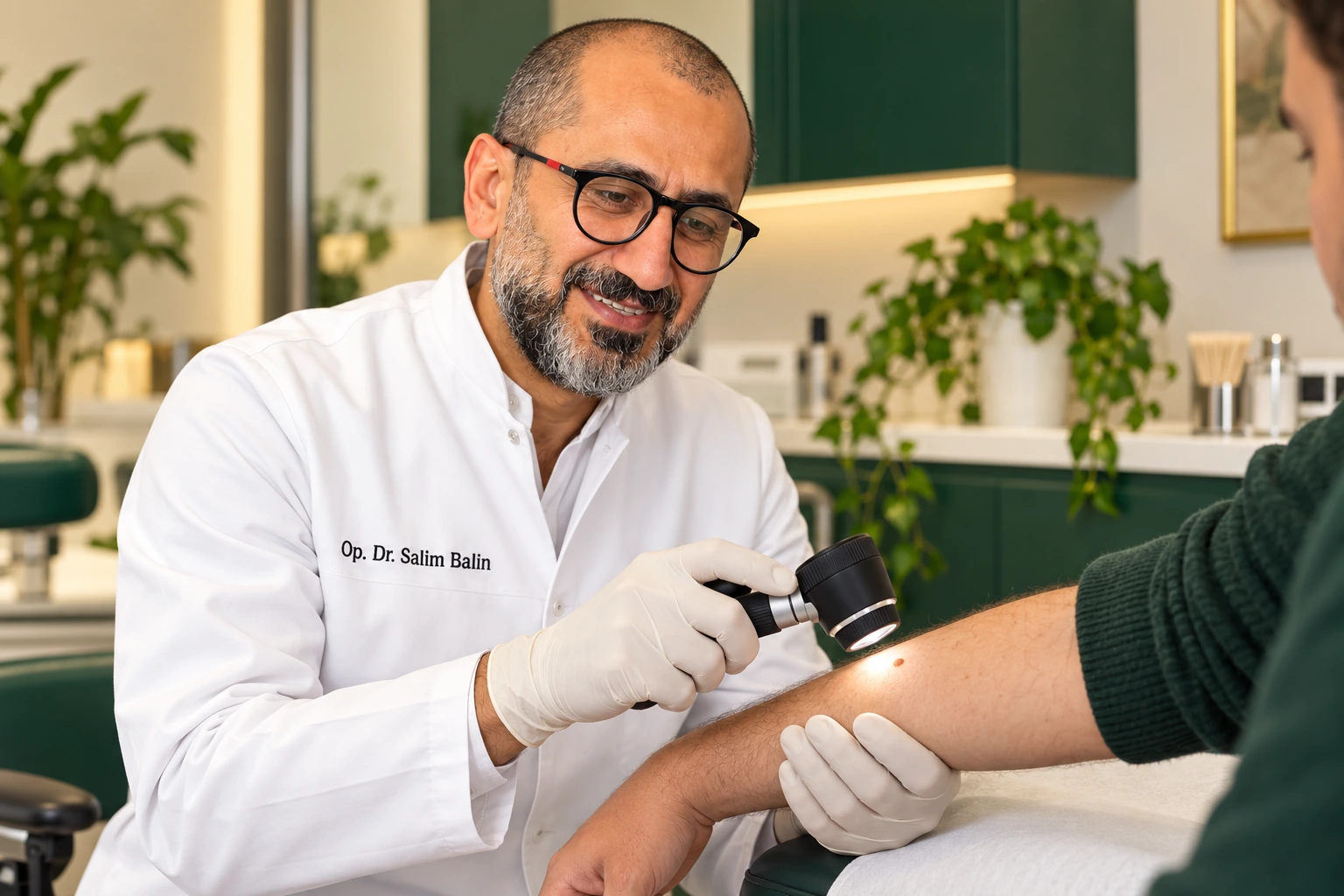
- Examination: The location, number and size of warts and any previous treatments are assessed. If a lesion looks atypical, a pathology examination is planned first when needed.
- Local anaesthesia: The area is numbed with cream or a fine needle.
- Laser treatment: Wart tissue is vaporised while protecting the surrounding healthy skin. Because laser smoke can contain viral particles, a smoke evacuator and suitable masks are used. When needed, laser is combined with cautery and a sample of suspicious tissue is sent for pathology.
- Dressing: The area is cleaned and ointment and a dressing applied if needed; you go home the same day.
- Follow-up: Healing and any new warts are checked after about 2–4 weeks.
Duration depends on the number and location of warts; a single small wart takes little time, widespread warts longer.
Which warts are treated?
- Hand and finger warts
- Plantar warts on the sole of the foot
- Facial and neck warts
- External genital warts
- Perianal warts and warts inside the anal canal
The anal canal is checked separately during the general surgical examination. Warts inside the vagina or on the cervix are referred to a gynaecologist.
Who is it suitable for, and who not?
Laser is considered for warts that have not responded to creams or freezing, are numerous, cover a wide area, or when a faster result is wanted. The US CDC guideline also notes that surgical methods including laser may be among the most useful options for large or extensive genital warts.
When laser may not be suitable or should be postponed:
- Lesions that do not look like typical warts, change colour or shape, or bleed (the diagnosis is clarified first)
- Active infection or an open wound in the area
- Conditions that may delay healing, such as uncontrolled diabetes or immunosuppressive treatment (individual assessment needed)
- Pregnancy (the method is chosen together with an obstetrician)
For genital and anal warts: Informing partners, and examination if needed, is recommended; screening for other sexually transmitted infections can be discussed. The HPV vaccine does not treat existing warts but helps protect against HPV types not yet encountered.
Laser and other methods
| Method | How it is done | Sessions | When it is preferred |
|---|---|---|---|
| Laser | Wart tissue vaporised under local anaesthesia | Usually one | Widespread, stubborn or treatment-resistant warts |
| Freezing (cryotherapy) | Wart frozen with liquid nitrogen | Usually several | Small and few warts |
| Surgical removal / cautery | Cut or cauterised under local anaesthesia | One | Stalked or few warts, when pathology is needed |
| Prescription creams | Applied at home for weeks | Weeks to months | Small external genital warts |
There is no strong evidence that one method is best for everyone; the choice depends on location, number and personal preference. Studies report that CO2 laser is effective at clearing warts; one meta-analysis found higher clearance and lower 3-month recurrence than freezing. However, these findings rest on few, low-quality studies.
Recovery, aftercare and risks
For small warts the wound usually closes in 1–2 weeks; larger areas take longer. Most people return to daily activities the same or next day.
- Keep the area clean and dry and use the recommended ointment.
- Do not pick scabs; avoid pools and saunas while healing.
- After genital treatment, avoid sexual contact until the wound has healed.
- Use sun protection on the face and exposed areas.
Possible side effects: Temporary pain and burning, redness, swelling, infection, colour change (lighter or darker spots) and, rarely, scarring.
Recurrence: Laser removes visible warts but not the virus. New warts most often appear in the first 3 months, so follow-up visits matter and further treatment is given if needed. Seek advice for fever, increasing redness, discharge or persistent pain.
Frequently asked questions
Does laser wart treatment hurt?
Because local anaesthesia is used, there is usually no pain during the procedure; the anaesthetic injection may sting briefly. Tenderness afterwards usually settles with simple painkillers.
Can warts come back after laser?
Yes. Laser does not clear the virus from the body; new warts are most common in the first 3 months and are assessed at follow-up.
Can genital warts be treated with laser?
Yes, laser can be used for external genital and anal warts. Warts inside the anal canal are also assessed at the general surgical examination; warts inside the vagina or on the cervix need assessment by a gynaecologist.
Does the HPV vaccine treat warts?
No. The vaccine does not treat existing warts; it helps protect against HPV types not yet encountered.
Laser wart removal cost in Istanbul, Turkey (2026): what determines the price?
Pricing depends on the location and number of warts, the area involved and the findings at examination, so a fixed price is not published on this site. Up-to-date 2026 pricing is provided after your consultation; for preliminary information you can contact us by phone or WhatsApp.
Related guides
Further reading
CDC — Anogenital warts, STI treatment guidelinesLocal management of anogenital warts: systematic review and meta-analyses (Dermatology and Therapy, 2019)Effectiveness of topical and ablative therapies: network meta-analysis (BMJ Open)InformedHealth.org (IQWiG) — Treatment options for genital warts (2025)NHS — Warts and verrucasGeneral patient information. Individual treatment is planned in consultation.