Cupping (Hijama) Therapy in Ataşehir, Istanbul: What Is It, What Does It Help With? Before, After and the Evidence
Short answer: Hijama is a traditional practice in which a small amount of blood is drawn through superficial scratches after a cup has created suction on the skin; it is also called wet cupping. Research reports that it may give short-term relief mainly for neck, low back and knee pain, but the quality of the evidence is low to moderate. Hijama does not replace medical treatment; it should be done after an examination, with sterile single-use equipment, by a certified physician.
In this article on cupping (hijama) therapy in Ataşehir, you will find how hijama differs from dry cupping, how it is done, what to watch for before and after, and what science says today. For the treatment and appointments, see our Cupping Therapy page.
The difference between cupping and hijama
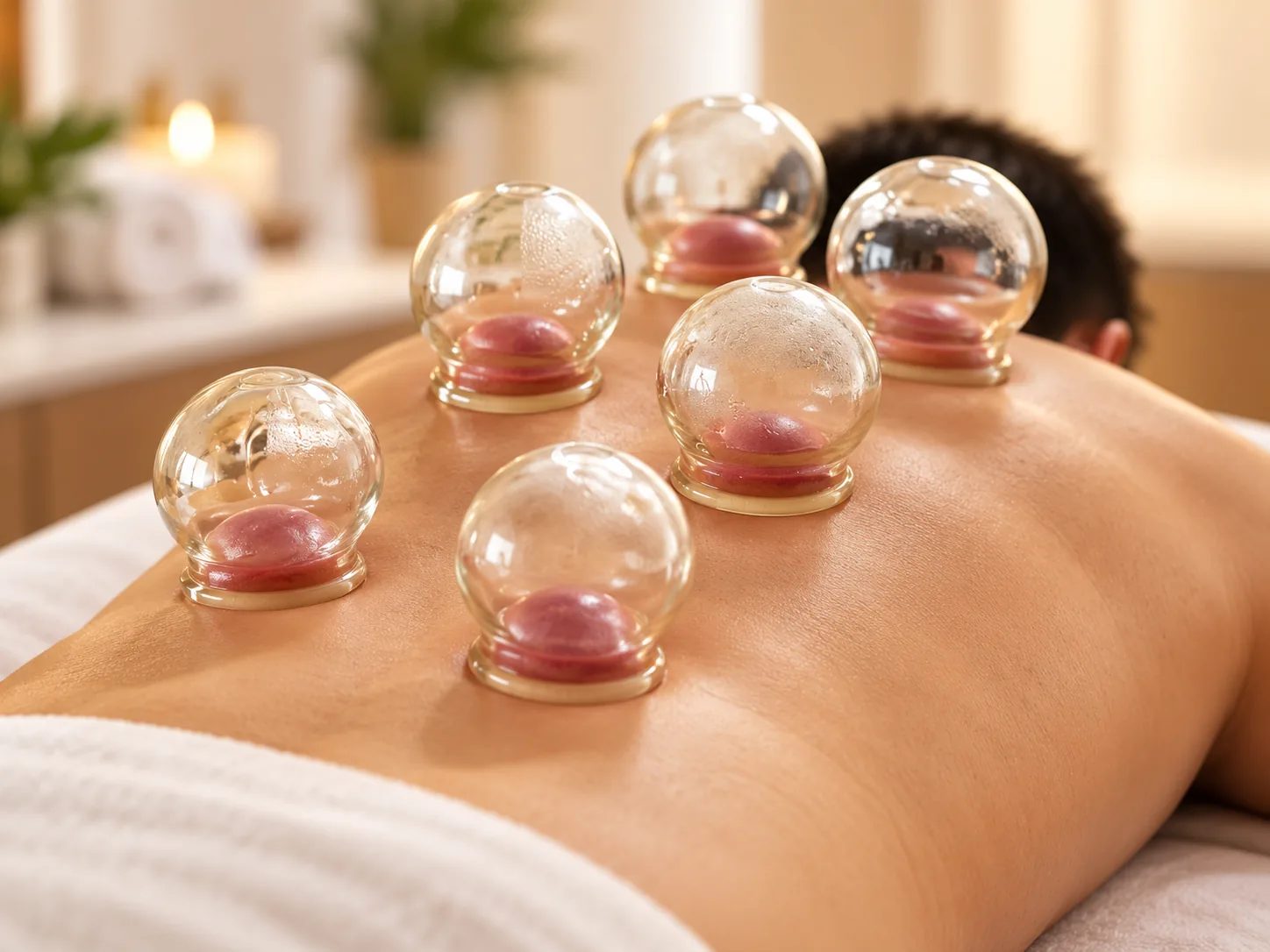
Cupping therapy is based on creating suction (negative pressure) with a cup placed on the skin. It is a traditional method practised for centuries in China, the Middle East and Anatolia. There are two main types:
| Dry cupping | Hijama (wet cupping) | |
|---|---|---|
| What is done? | Only suction is applied with the cup | After suction, superficial scratches are made on the skin and the cup is placed again |
| Is blood drawn? | No, the skin stays intact | Yes, a small amount of blood collects in the cup |
| What it leaves | A temporary round bruise | A temporary bruise and small scratches that heal quickly |
| Extra care | Skin sensitivity | Bleeding risk, sterile setting, infection control |
Which type is suitable is decided at the examination, based on your complaint and health status.
How is hijama done?
Before:
- Tell your doctor about all the medicines you take, especially blood thinners and aspirin; do not stop any medicine on your own.
- Mention any history of anaemia, bleeding disorder, diabetes or heart disease; a blood test may be requested first.
- In the previous 24 hours, avoid meat and dairy and eat mostly vegetables. Do not come completely fasted: have a light meal and drink enough water.
- Shower before the session; do not apply cream or oil to the area, and wear comfortable, dark-coloured clothes.
Steps of the procedure:
- Examination and consent: Your complaint, medical history and medicines are assessed; the procedure and possible side effects are explained.
- Preparing the area: The skin is cleaned with an antiseptic solution.
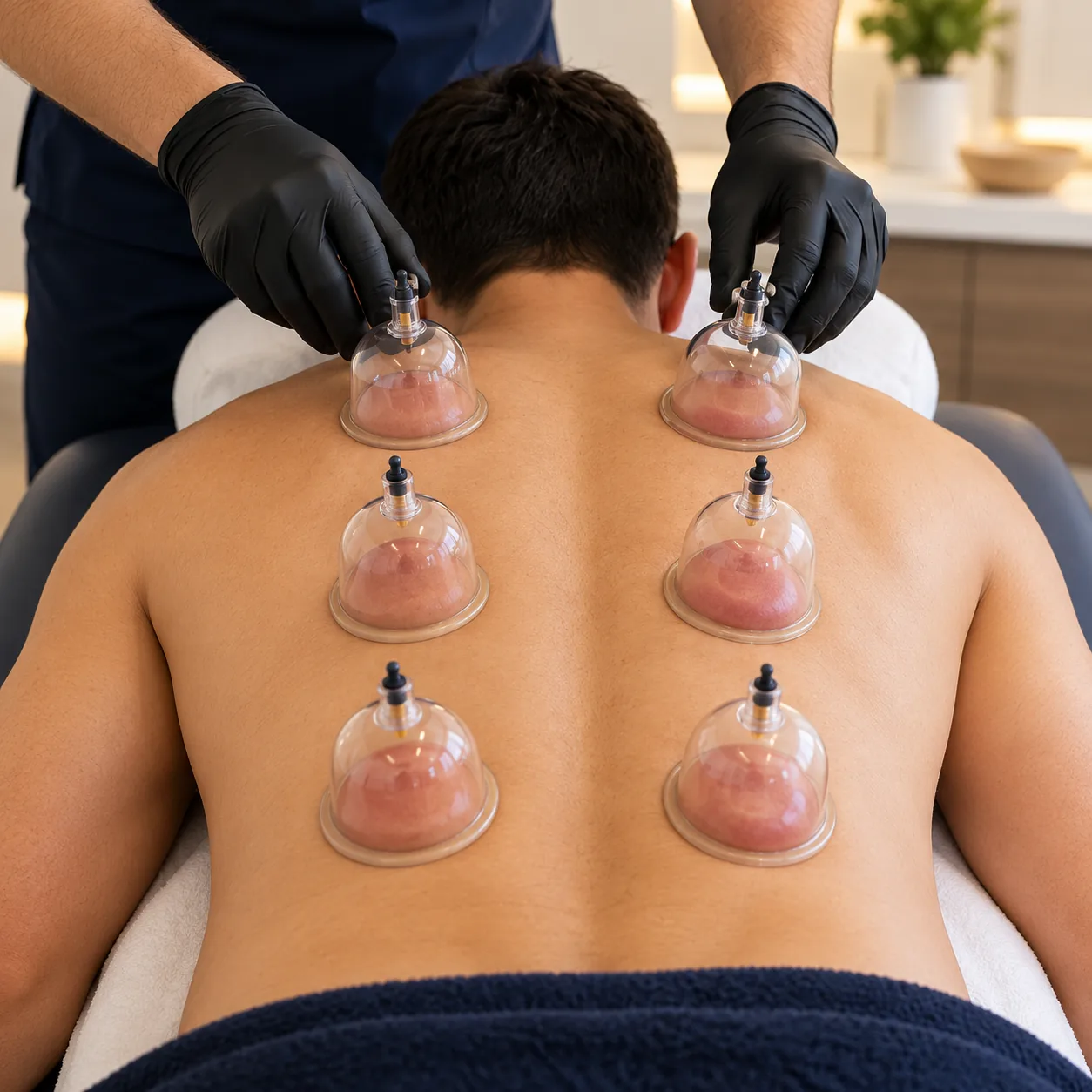
- Suction: Single-use cups are placed on the skin and suction is applied for a few minutes.
- Superficial scratches: The cup is removed and very superficial scratches are made with a sterile, single-use instrument.
- Collecting the blood: The cup is placed again and a small amount of blood collects in it. This step may be repeated a few times if needed.
- Dressing: The area is cleaned and covered. Most people return to daily activities the same day.
The duration depends on the area treated and the number of cups. Cups and cutting instruments must be personal and single-use; shared equipment can transmit blood-borne infections such as hepatitis B and C.
What does hijama help with? What does the science say?
The strongest data on cupping and hijama concern pain. A study published in Frontiers in Neurology in 2023, which brought together 14 meta-analyses, reported that cupping may be useful for some types of pain, but that there is no high-quality evidence in any area.
| Complaint | What research shows | Evidence level |
|---|---|---|
| Knee osteoarthritis pain | Improvement in pain and function | Moderate |
| Neck pain | Reduction in pain | Low–moderate |
| Low back pain | Reduction in pain | Low–moderate |
| Chronic pain | Reduction in pain | Low–moderate |
| Pain after shingles | Limited positive findings | Very low |
Most of these findings come from short follow-up and small studies. The NCCIH, part of the US National Institutes of Health (NIH), also states that cupping may help reduce pain, but that the evidence is not strong.
Claims without evidence: There are not enough scientific studies to support claims such as “it cleans the blood, removes toxins, strengthens immunity, or treats high blood pressure or diabetes”. Hijama is therefore considered a supportive option in pain management; it does not replace medical diagnosis and treatment. Do not stop your medicines because of hijama.
Who should not have hijama?
In the following situations hijama is not done, or is planned only after a physician’s assessment and with extra precautions:
- Bleeding disorder or use of blood-thinning medicines
- Marked anaemia
- Pregnancy
- Active infection, open wound, eczema or psoriasis flare in the treatment area
- Uncontrolled diabetes or conditions that delay wound healing
- Uncontrolled heart disease or serious chronic illness
- Immunosuppressive treatment (for example chemotherapy, medicines after organ transplant)
- Very advanced age, frail general condition, and children
- History of fainting easily
Cups are not applied over varicose veins, prominent blood vessels or bony prominences.
After hijama: marks, care and what to watch for
When do the marks fade? The round bruises left by the cups are temporary and usually fade within a few days to two weeks. The small scratches of hijama mostly heal without a scar. If you see another doctor, tell them these marks are from hijama.
Care tips:
- Keep the area dry for the first 24 hours; leave the dressing on for as long as your doctor advises and do not scratch.
- On the first day, avoid strenuous exercise, hammam, sauna and swimming pools.
- For the next 24 hours, also avoid meat and dairy; drink plenty of water, eat light, mostly vegetable-based meals and rest.
- If you feel mild tiredness or dizziness, sit or lie down.
Possible side effects: Temporary pain, bruising and tenderness are common. Less often, infection, burns (with fire cupping), permanent skin discoloration or scarring can occur; very frequent hijama can lead to anaemia.
See a doctor immediately if you have:
- Fever, increasing redness, swelling or discharge from the scratches
- Bleeding that does not stop
- Persistent dizziness or fainting
Who can perform hijama in Türkiye?
In Türkiye, cupping falls under the Ministry of Health’s Traditional and Complementary Medicine (GETAT) regulation, which was renewed on 28 April 2026. Under this regulation:
- The diagnosis and treatment plan are made by a physician.
- The procedure is performed by people holding a certificate registered by the Ministry.
- It must be done in a GETAT unit or centre authorised by the Ministry.
Hijama done at barbers, beauty salons, at home or in unlicensed places carries a risk of infection and bleeding because of non-sterile equipment and the lack of a medical assessment. Do not hesitate to ask the practitioner for their certificate.
At our clinic in Ataşehir, cupping and hijama are performed by Op. Dr. Salim Balin for suitable patients after an examination. For details see the Cupping Therapy page, and for other treatments the GETAT page.
Cupping (hijama) therapy in Ataşehir, Istanbul
Cupping (hijama) therapy is performed for suitable patients after an examination at Op. Dr. Salim Balin’s clinic in Ataşehir (Metropol İstanbul, Block B, 18th floor). The clinic is easy to reach from Asian-side districts of Istanbul such as Kadıköy, Üsküdar, Ümraniye, Maltepe and Çekmeköy.
For appointments, call or WhatsApp +90 506 520 30 55. Opening hours: Monday–Saturday 09:00–18:00. Address and directions
The clinic is in Atatürk Mahallesi, Ataşehir (Metropol İstanbul Block B), close to the Barbaros, İçerenköy, Küçükbakkalköy, Kayışdağı, Yenisahra and Ferhatpaşa neighbourhoods and to Kozyatağı, Bostancı, Göztepe and Erenköy in Kadıköy. Patients from Sancaktepe and Kartal are also welcome.
Frequently asked questions
Are cupping and hijama the same thing?
No. In dry cupping only suction is applied and the skin stays intact. In hijama (wet cupping), a small amount of blood is drawn through superficial scratches after suction.
Does hijama hurt?
Because the scratches are very superficial, most people feel only a slight prick or ache. There may be some tenderness for a few days afterwards.
On which days is hijama done?
Traditionally the 17th, 19th and 21st days of the lunar (Hijri) month are preferred; this is a religious and cultural tradition. There is no study showing that a particular day is medically more effective; the timing is planned together according to your health and complaint.
Should hijama be done on an empty stomach?
Tradition recommends an empty stomach. However, fasting for a long time can increase the risk of dizziness and fainting during the procedure, so we recommend a light meal beforehand.
What should I eat before and after hijama?
In traditional hijama, avoiding meat and dairy and eating mostly vegetables for 24 hours before and 24 hours after the session is recommended. During this time drink plenty of water, choose light meals and do not fast for long. This advice is based on tradition; its effect has not been studied scientifically.
How often can it be done?
The frequency is set individually by the physician. Because very frequent hijama can cause anaemia, your blood values are checked if needed.
Can I shower before and after hijama?
Showering before hijama is recommended. Afterwards, keep the area dry for the first 24 hours; after that you can shower. Avoid hammam, sauna and swimming pools until the scratches have healed.
Does hijama leave marks?
Bruises usually fade within a few days to two weeks, and the small scratches mostly heal without a scar. Rarely, permanent discoloration or a scar may remain.
Cupping (hijama) prices in Ataşehir 2026: how is the fee set?
The fee for cupping (hijama) is set individually according to whether dry cupping or hijama is used, the treatment area and number of cups, the planned number of sessions and the examination findings. For this reason no fixed price is published on the site; current 2026 fees are given after the examination. For preliminary information you can reach us by phone or WhatsApp.
Related guides
Sources and further reading
Wang L et al. Efficacy of cupping therapy on pain outcomes: an evidence-mapping study (Frontiers in Neurology, 2023)NCCIH (US National Institutes of Health) — CuppingTraditional and Complementary Medicine Practices Regulation, Official Gazette, 28 April 2026 (summary, in Turkish)NTV — Access to GETAT services made easier (28 April 2026, in Turkish)General patient information. Your personal treatment plan is set at the examination.
Ask me
Get in touch with your questions about this topic or to request an appointment.
💬 Ask me on WhatsApp — +90 506 520 30 55
✉️ Ask me by email — info@drsalimbalin.com
📍 We are at Metropol İstanbul Mall, in the best location in Ataşehir, Istanbul.
Metropol İstanbul Block B, Floor 18 · Ataşehir/Istanbul · Directions ↗