Endolaser for Lipoedema: Who It Suits, the Process and Its Limits
Lipoedema is an abnormal, symmetrical, painful build-up of fat, mostly in women's legs and sometimes arms, with easy bruising. There is no cure; the basis of treatment is compression, activity and weight control. Endolaser (laser-assisted lipolysis) can be considered for selected patients as part of this treatment to reduce local fat and support skin tightening; it does not eliminate lipoedema.
What is lipoedema?
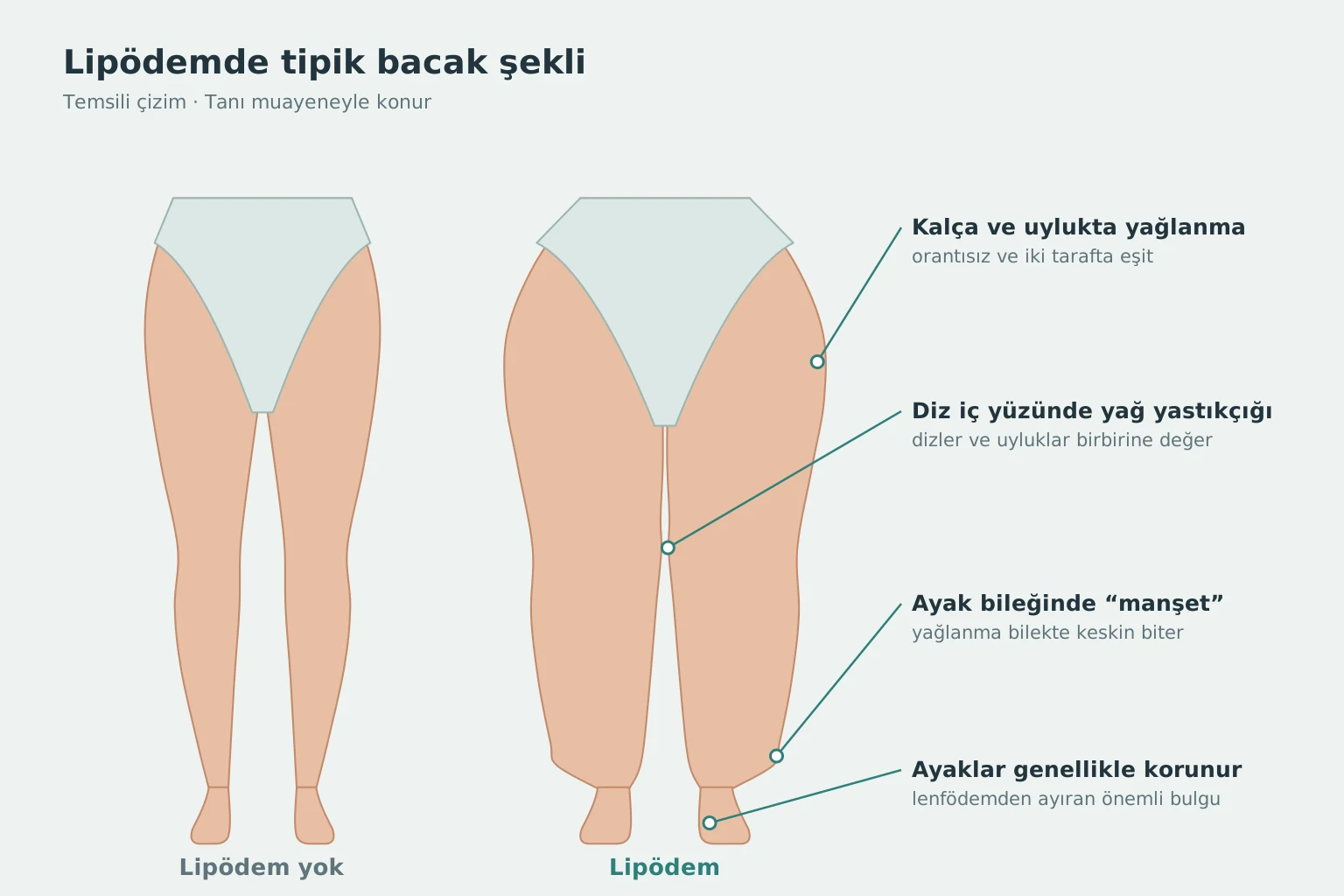
Lipoedema is a chronic condition with fat build-up in the hips, thighs and legs (sometimes arms) that is out of proportion to the rest of the body and equal on both sides. It often becomes noticeable at puberty, pregnancy or menopause and can run in families.
- Pain, tenderness and heaviness in the legs
- Easy bruising
- Soft, cool, sometimes dimpled skin
- Fat ending at the ankles, with the feet usually spared
- Leg fat that does not reduce with diet and exercise
Unlike obesity, lipoedema is not caused by excess weight and can occur at a healthy weight. Unlike lymphoedema, it is two-sided and spares the feet; advanced lipoedema can, however, develop lymphoedema over time.
Treatment options
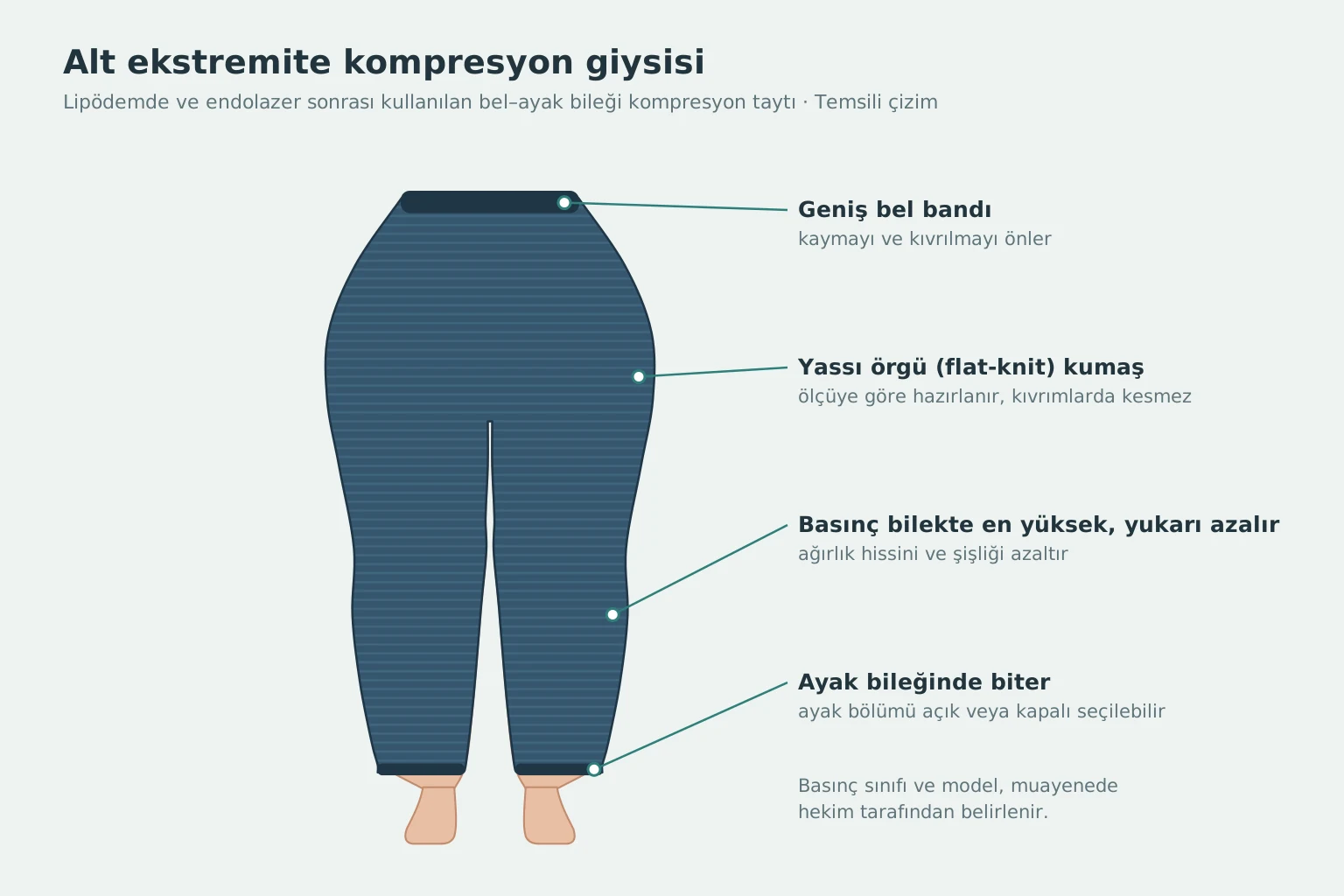
Non-surgical (conservative) care is the foundation: compression garments, manual lymphatic drainage, regular activity such as walking and swimming, and weight control. Liposuction (tumescent, water-assisted or laser-assisted) can reduce local lipoedema tissue and improvements in pain and mobility have been reported, but the evidence is limited. In its 2022 guidance, the UK's NICE found the evidence on safety and efficacy inadequate and recommended the procedure only in the context of research.
How is endolaser used in lipoedema?
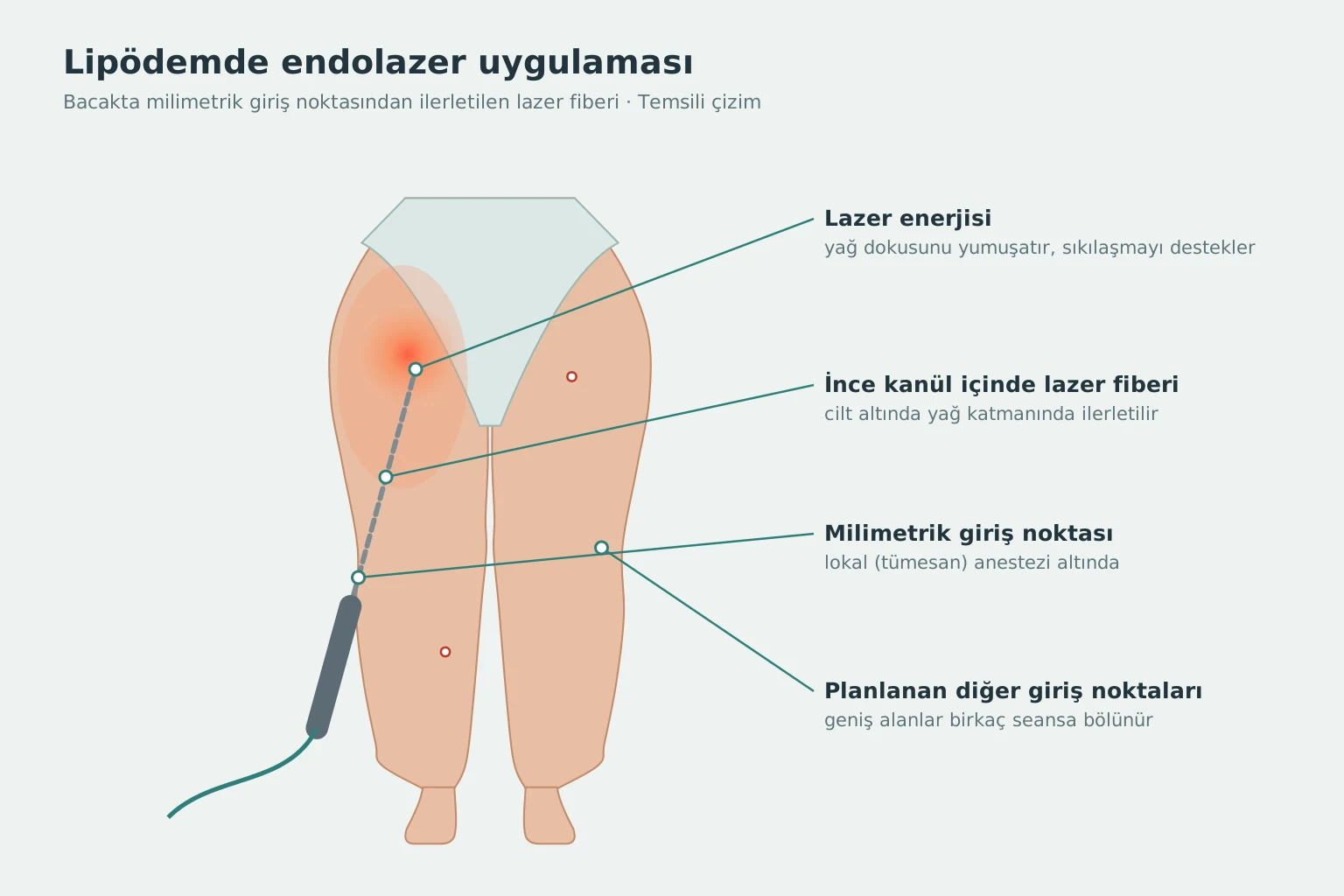
A thin laser fibre is introduced beneath the skin through millimetre-sized entry points. Laser-assisted lipolysis softens and breaks down fat, which can be removed with fine cannulas; the laser also heats tissue beneath the skin to stimulate collagen and limit laxity after fat reduction.
It may be considered for diagnosed patients who have followed compression and activity for several months, have a stable weight and realistic expectations, particularly for limited areas such as the inner knee, inner thigh, hips and arms. It does not cure lipoedema, large areas may need other techniques or several sessions, and there is no strong evidence that laser assistance gives better results than other liposuction techniques.
Who is it not suitable for?
- Pregnancy and breastfeeding
- Active skin infection in the area
- Bleeding disorders or blood thinners that cannot be paused
- Uncontrolled diabetes, heart or kidney disease
- Previous deep vein thrombosis or significant venous disease not yet assessed
Process and recovery
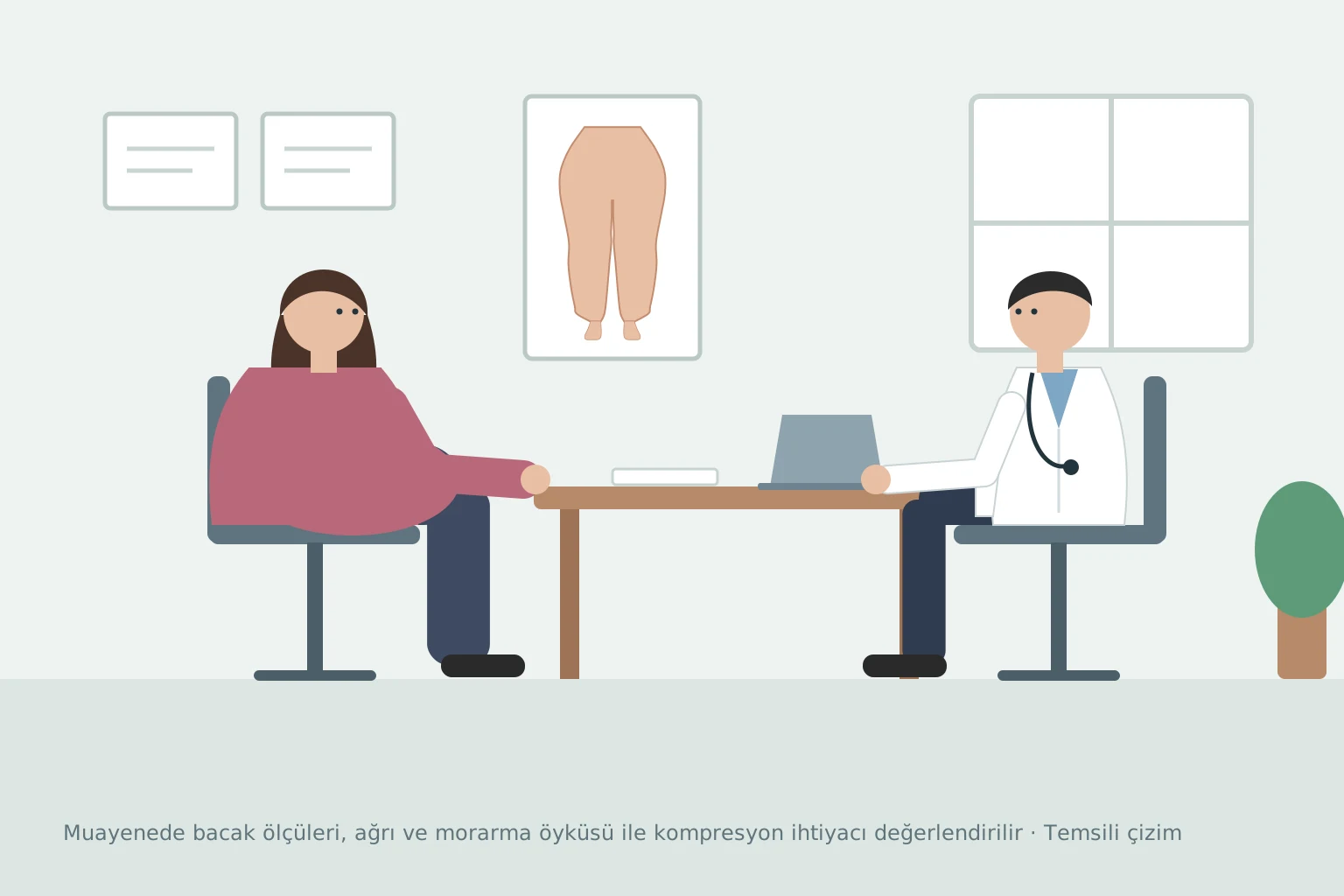
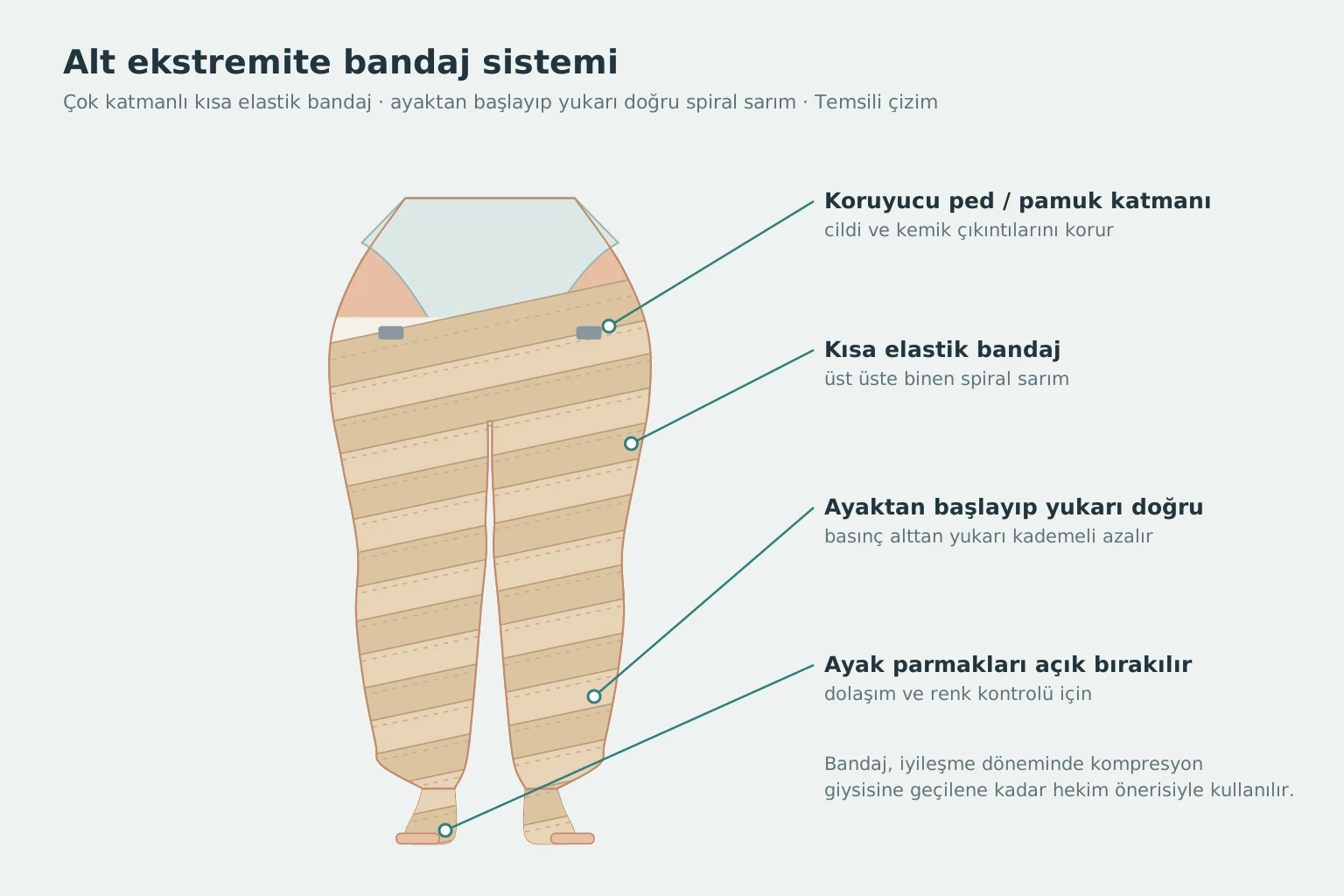
Usually under local (tumescent) anaesthesia, with same-day discharge; the area treated per session is limited for safety. Swelling, bruising and tenderness are expected in the first days, and compression garments are worn for several weeks. Most people return to desk work within a few days. Change becomes visible within weeks and is usually assessed at 3–6 months.
Risks
Bruising, swelling and temporary numbness are common. Seroma, haematoma, surface irregularity, laser burns and infection can occur; deep vein thrombosis and fat embolism are rare but serious. Seek medical help promptly for increasing leg pain or swelling, shortness of breath, chest pain, fever or spreading redness.
Frequently asked questions
Does endolaser cure lipoedema?
No. Lipoedema is chronic. Endolaser aims to reduce local fat and improve pain, heaviness and appearance; compression and activity continue afterwards.
How many sessions are needed?
It depends on the area and stage. If both legs are widely affected, treatment is split into several sessions for safety.
Is lipoedema the same as cellulite?
No. Cellulite is a dimpled skin appearance without pain; lipoedema is painful, bruises easily and causes disproportionate fat. They can occur together.
Where is lipoedema assessed in Ataşehir?
Op. Dr. Salim Balin's practice is at Atatürk Mahallesi, Ertuğrul Gazi Cad. No: 2H, Metropol İstanbul B Block, Floor 18, No: 282, Ataşehir, Istanbul. Appointments: +90 506 520 30 55 by phone or WhatsApp, Monday–Saturday 09:00–18:00.
Sources
NICE IPG721 · Liposuction for chronic lipoedema (2022)NICE · Interventional procedure overview: liposuction for chronic lipoedemaNHS · LipoedemaGeneral patient information. Individual treatment is planned in consultation.