Botox for anal fissure: breaking the cycle of pain and muscle spasm
Botox (botulinum toxin) for anal fissure is an injection into the internal anal sphincter that temporarily reduces muscle spasm and gives the wound time to heal. Its effect usually lasts a few months and it does not require cutting the muscle, although some patients may need a repeat injection or surgery. At our clinic in Ataşehir, Istanbul, suitability is assessed at examination.
Sharp pain starting during bowel movements, burning afterwards and blood on the toilet paper are among the symptoms of anal fissure that affect daily life. Delaying the toilet because of pain can harden the stool and make the next bowel movement harder.
Treatment aims to relieve pain and correct the conditions that prevent healing. Botulinum toxin (Botox) is one option that, in suitable patients, can support healing by reducing muscle spasm.
What is an anal fissure?
An anal fissure is a tear in the sensitive lining near the anal opening, caused by passing hard stool or by frequent diarrhoea and repeated irritation. The typical complaint is sharp pain during bowel movements – often described as “like broken glass” – lasting minutes to hours, sometimes with a little bright red blood. Not every anal pain or bleeding is a fissure; haemorrhoids, abscess and bowel diseases can look similar, so diagnosis should be confirmed by examination.
What is the difference between acute and chronic anal fissure?
New tears are acute fissures and often heal with softer stool, diet, warm sitz baths and medication. Symptoms lasting more than about six weeks with signs of chronicity – hardened edges and a small skin tag (“sentinel pile”) – suggest a chronic fissure. A chronic fissure does not automatically mean surgery; medication, Botox and surgery are weighed against the patient's situation and previous response.
Why may a fissure not heal?
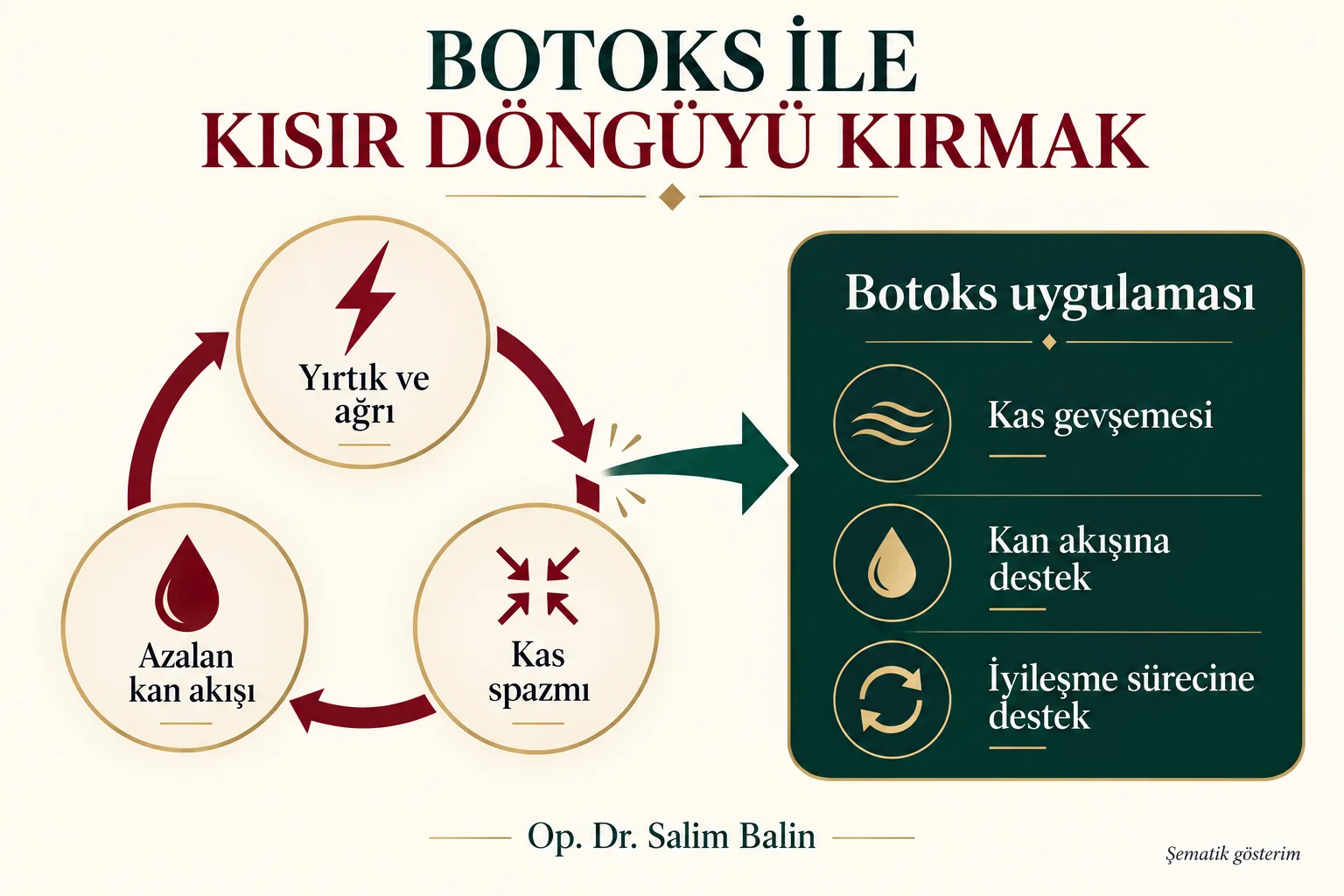
Pain can trigger excessive contraction of the internal anal sphincter; higher pressure reduces blood flow and delays healing: Fissure → Pain → Muscle spasm → Reduced blood flow → Delayed healing. Reducing muscle tension helps break this cycle, but not every fissure has high pressure – especially after childbirth injury or previous anal surgery.
How does Botox work in anal fissure?
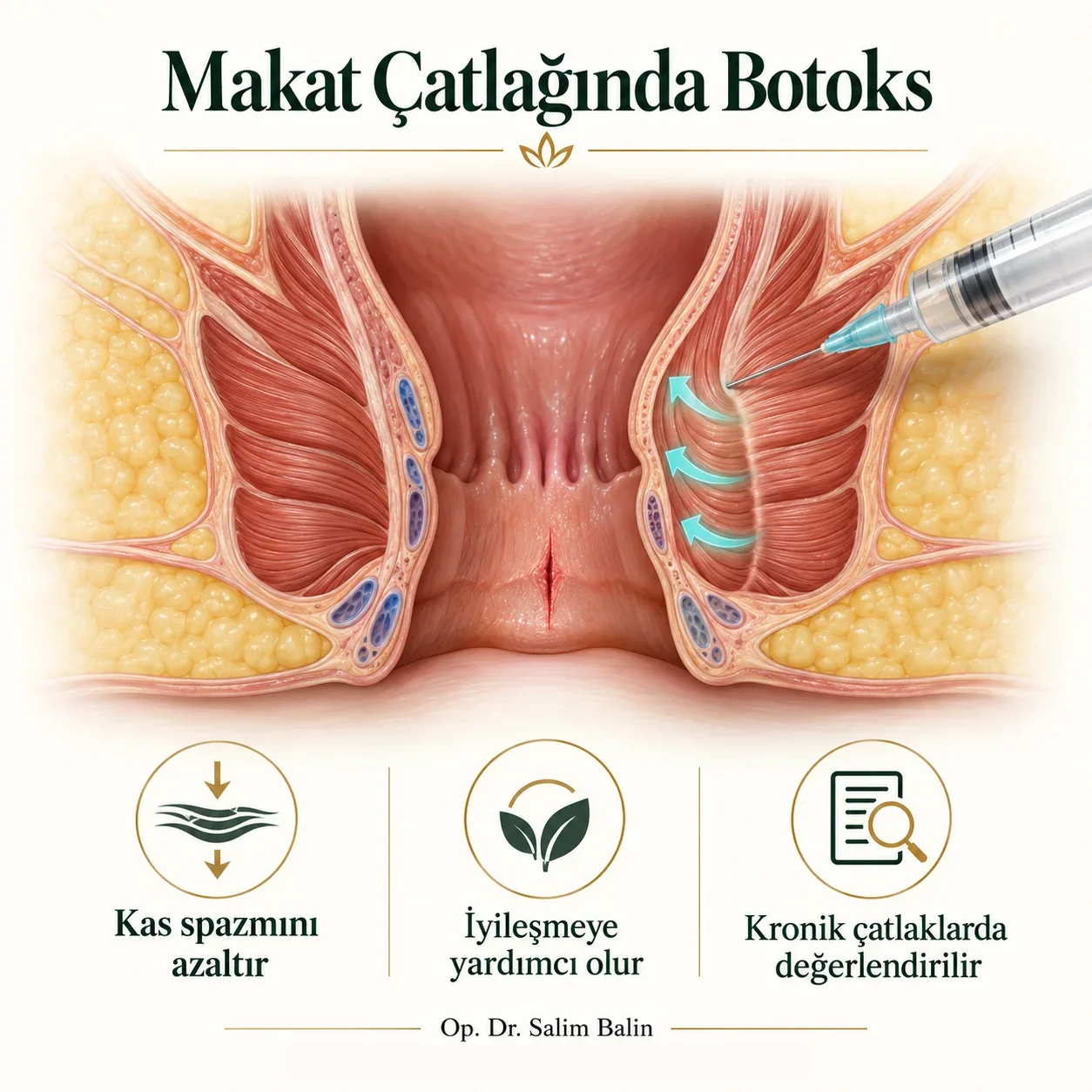
Botulinum toxin temporarily reduces contraction of the injected muscle, easing internal sphincter tension so the wound can heal. Botox does not close the fissure directly; it buys time for healing by reducing spasm. The effect usually lasts a few months; soft stool and avoiding straining matter during this time, and healing is checked at follow-up.
Who may be considered?
Mainly chronic fissure patients whose symptoms persist despite appropriate medication; it avoids cutting the muscle. Previous treatments, existing gas or stool control problems, past anal surgery, obstetric muscle injury and bowel disease are reviewed first. Decisions in pregnancy or breastfeeding are individual.
How does the procedure work?
After history and examination, Botox is injected at doses and points chosen by the doctor. You may feel 2–3 brief needle pricks; anaesthesia can be used for comfort. Injection alone needs no muscle cut or stitches, and most patients go home the same day. After sedation or general anaesthesia, do not drive immediately.
Botox or surgery?
Botox relaxes the muscle temporarily; lateral internal sphincterotomy cuts part of it to lower pressure. Surgery may give higher healing rates in selected chronic fissures, while Botox avoids a muscle cut but may need repeating or another treatment. Both have benefits and risks, including temporary gas or liquid stool control difficulty after Botox.
According to the 2023 guideline of the American Society of Colon and Rectal Surgeons (ASCRS), Botox gives results similar to topical treatments as first-line therapy for chronic anal fissure and may modestly improve healing when topical treatment has failed (Davids et al., Dis Colon Rectum, 2023). A Cochrane review found that medical treatments heal fewer fissures than surgery but were not associated with a risk of permanent incontinence (Nelson et al., Cochrane, 2012).
What are the side effects of Botox?
Short-lived tenderness, pain or minor bleeding at the injection site; in some patients temporary gas leakage and, less often, difficulty holding liquid stool. These usually settle as the effect wears off, but a temporary effect does not mean zero risk. Report any new control problem to your doctor.
What should you pay attention to after treatment?
Aim for soft, formed stool (gradual fibre, fluids, softeners if advised); do not delay the toilet or strain; use warm sitz baths and gentle cleaning; keep follow-up visits – less pain does not mean full healing.
Which symptoms need prompt assessment?
Recurrent bleeding or persistent pain need examination. Fever, swelling, discharge or steadily increasing pain unrelated to bowel movements may suggest an abscess; heavy bleeding, dizziness or fainting need urgent care. To book an assessment in Ataşehir, Istanbul: +90 506 520 30 55 or WhatsApp.
Anal fissure assessment and Botox in Ataşehir, Istanbul
Anal fissure symptoms are assessed at Op. Dr. Salim Balin’s clinic in Ataşehir. The examination considers whether the fissure is acute or chronic, its position, any associated haemorrhoids or skin tags, bowel habits and previous treatments; the appropriate option, including Botox for anal fissure, is then planned individually.
We see patients from Ataşehir as well as Kadıköy, Ümraniye, Maltepe, Çekmeköy, Üsküdar and other districts of Istanbul.
Address: Atatürk Mahallesi, Ertuğrul Gazi Cad. No: 2H, Metropol İstanbul B Blok, Floor 18, No: 282, 34750 Ataşehir/Istanbul · Monday–Saturday 09:00–18:00 · +90 506 520 30 55 · WhatsApp · Address and directions
The clinic is in Atatürk Mahallesi, Ataşehir (Metropol İstanbul Block B), close to the Barbaros, İçerenköy, Küçükbakkalköy, Kayışdağı, Yenisahra and Ferhatpaşa neighbourhoods and to Kozyatağı, Bostancı, Göztepe and Erenköy in Kadıköy. Patients from Sancaktepe and Kartal are also welcome.
Frequently asked questions
Can an anal fissure come back after Botox?
Yes. Hard stools, straining or ongoing diarrhoea make recurrence more likely; some patients need repeat injection or another treatment.
Will I feel pain during the procedure?
You may feel 2–3 brief needle pricks depending on the number of injection points; anaesthesia can improve comfort.
How long does Botox last?
Usually a few months, depending on product, dose and individual response; a lasting effect does not guarantee healing.
Can Botox cause permanent side effects?
The muscle effect is temporary and gas or liquid stool control problems usually resolve, but the risk of permanent effects cannot be said to be zero.
Can chronic fissures heal with Botox?
Yes, in selected chronic fissure patients, especially when medication has not worked; success is not guaranteed.
Does an anal fissure turn into cancer?
A typical anal fissure does not become cancer, but persistent bleeding or non-healing wounds should be examined.
Is Botox or surgery better for anal fissure?
Surgery (lateral internal sphincterotomy) may give higher healing rates in carefully selected chronic fissures; Botox does not require cutting the muscle and has not been associated with permanent incontinence. The decision is made at examination based on the fissure, previous treatments and continence.
Where is Botox for anal fissure performed in Ataşehir, Istanbul?
Assessment and Botox treatment for anal fissure are provided at Op. Dr. Salim Balin’s clinic at Atatürk Mahallesi, Ertuğrul Gazi Cad. No: 2H, Metropol İstanbul B Blok, Floor 18, No: 282, 34750 Ataşehir/Istanbul. For appointments, call or WhatsApp +90 506 520 30 55.
Related guides
Sources and further reading
Davids JS et al. ASCRS Clinical Practice Guidelines for the Management of Anal Fissures. Dis Colon Rectum. 2023;66(2):190–199 ↗Nelson RL et al. Non surgical therapy for anal fissure. Cochrane Database Syst Rev. 2012;(2):CD003431 ↗Management of anal fissures: guidelines from the American Society of Colon and Rectal Surgeons (ASCRS) – AAFP summary, 2024 ↗This content is for information only; always consult your doctor for diagnosis and treatment. Results of any surgical or interventional procedure vary from person to person.
Ask me
Get in touch with your questions about Botox for anal fissure or to request an appointment.
💬 Ask me on WhatsApp — +90 506 520 30 55
✉️ Ask me by email — info@drsalimbalin.com
📍 We are at Metropol İstanbul Mall, in the best location in Ataşehir, Istanbul.
Metropol İstanbul Block B, Floor 18 · Ataşehir/Istanbul · Directions ↗