Blood in Stool: Causes and What to Watch For – Ataşehir, Istanbul
Blood in stool is often caused by treatable problems of the anal region such as haemorrhoids or an anal fissure, but it can also be a sign of more serious conditions such as polyps, inflammatory bowel disease or bowel cancer. Bright red blood usually points to the anal region, dark red blood to the large bowel, and black, tarry stool to the upper digestive tract. Do not wait if bleeding is heavy or clotted, if you feel dizzy, or if stools are black. Even small, painless bleeding should be examined if it recurs. Assessment is available at our clinic in Ataşehir, Istanbul.
Seeing blood on toilet paper, in the toilet or on stool worries many people. The most common causes are haemorrhoids and anal fissures, but the cause cannot be determined with certainty from its appearance alone (healthdirect).
This article summarises likely sources by colour, common causes, what to do until you are examined, and which signs need urgent care.
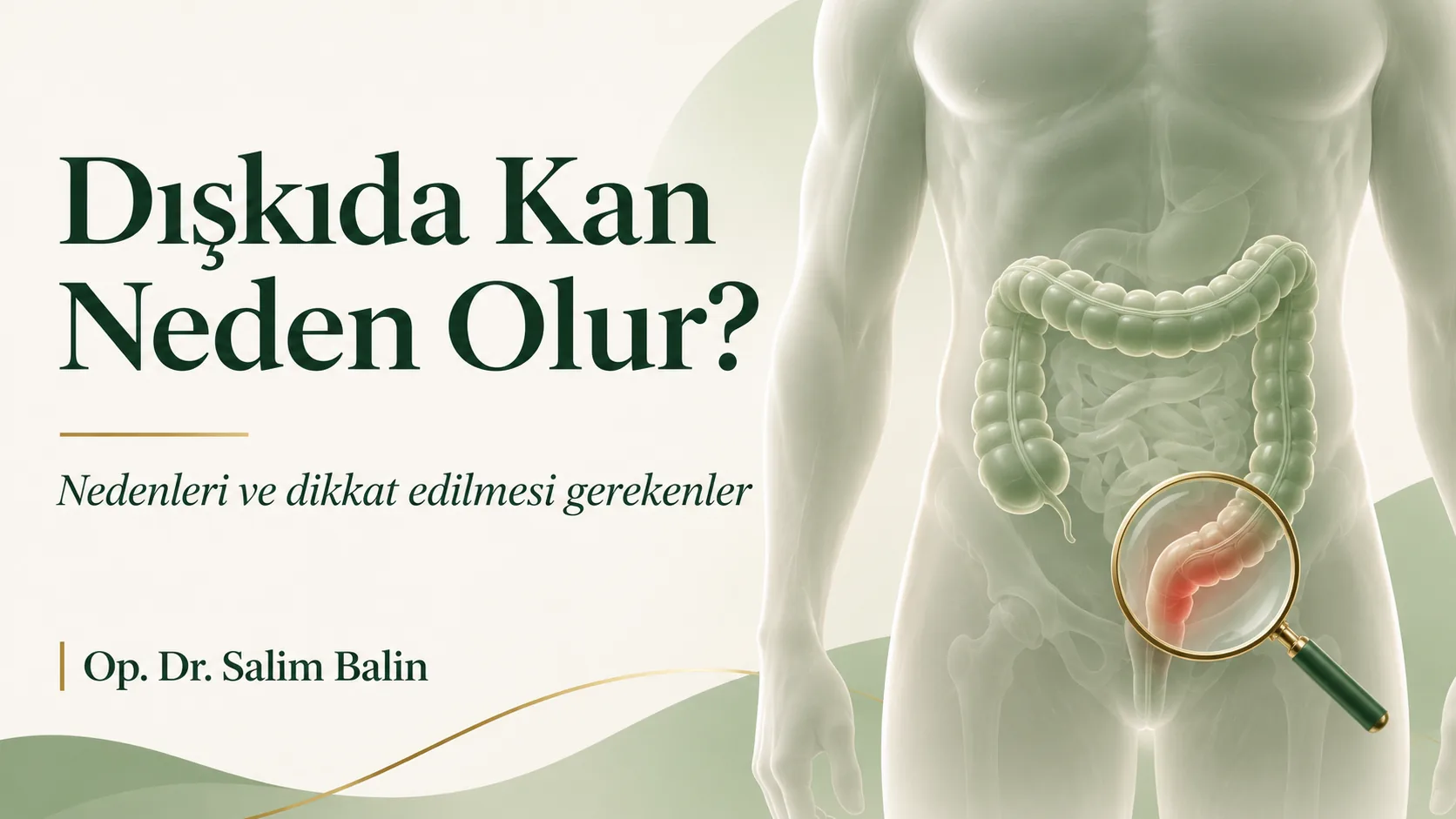
The cause of bleeding cannot be confirmed by colour alone; examination is needed.
What does the colour of the blood indicate?
The colour of the blood and how it relates to the stool give clues about which part of the digestive tract it may come from (healthdirect):
| Appearance of blood | Likely source | What to do |
|---|---|---|
| Bright red (on toilet paper, on the surface of stool or drops in the toilet) | Usually the anus and rectum: haemorrhoids, anal fissure, rectal causes | Planned examination; without delay if heavy or recurrent |
| Dark red, maroon, mixed into stool | Higher parts of the large bowel (diverticula, polyps, inflammatory bowel disease, tumour) | Prompt medical assessment and colonoscopy if needed |
| Black, tarry, sticky and foul-smelling | Usually the stomach or upper small bowel (e.g. ulcer) | Same-day medical assessment; emergency department if weak or dizzy |
| Invisible (occult) blood | Any part of the digestive tract | Colonoscopy is planned if a faecal occult blood test is positive |
Iron tablets, bismuth-containing stomach medicines and some foods (e.g. beetroot, dark berries) can darken stool or make it look reddish. Noting your medicines and recent meals helps the assessment.
What are the common causes of blood in stool?
The main conditions that can cause blood in stool are (NIDDK):
- Haemorrhoids (piles): usually painless bright red bleeding, especially with straining. See haemorrhoid treatment.
- Anal fissure: a small amount of bright red blood with sharp pain during and after bowel movements. See anal fissure treatment.
- Diverticular disease: bleeding from small pouches in the bowel wall, sometimes painless and heavy.
- Polyps: often symptomless; sometimes cause hidden or visible bleeding. Some polyps can turn into cancer over time.
- Infections: bloody stool with diarrhoea, fever and abdominal pain.
- Inflammatory bowel disease (ulcerative colitis, Crohn’s): recurrent bloody, mucus-containing diarrhoea, abdominal pain, weight loss.
- Bowel and rectal tumours: bleeding may be accompanied by a change in bowel habit, anaemia or weight loss.
A previous diagnosis of haemorrhoids does not mean that new or different bleeding is also due to haemorrhoids. If the pattern changes, becomes more frequent or new symptoms appear, reassessment is needed.
What should you do until you are examined?
If there are no urgent signs, these points help the assessment:
- Note the colour and amount of blood, whether it is mixed with stool and how often it occurs; take a photo if possible.
- Write down any pain, constipation, diarrhoea, change in bowel habit, weight loss or tiredness.
- Do not try to “clear up” the bleeding yourself with haemorrhoid creams or suppositories before being examined; this can delay diagnosis.
- Tell your doctor if you take blood thinners (anticoagulants) or aspirin, but do not stop these medicines without medical advice.
- Mention any family history of bowel cancer or polyps.
Which signs need urgent care?
Go to the nearest emergency department or call 112 without delay if you have (HSE):
- Heavy, continuous or clotted bleeding
- Dizziness, feeling faint, palpitations, cold sweats or marked weakness
- Bleeding with severe abdominal pain
- Vomiting blood or coffee-ground-like material
- Bleeding that will not stop while taking blood thinners
Black, tarry stool may indicate bleeding from the stomach or small bowel and needs same-day medical assessment.
Does small, painless bleeding matter?
Yes. Small, painless bleeding is often due to haemorrhoids, but blood in stool is also one of the early signs of bowel cancer. See a doctor if bleeding comes with a change in bowel habit lasting several weeks, unexplained weight loss, tiredness or a lump in the abdomen (NHS).
Investigating the source with colonoscopy is particularly considered over the age of 45–50, with a family history of bowel cancer or with anaemia.
How is the source of bleeding investigated?
The assessment is planned according to age, symptoms and risk factors:
| Method | What it provides |
|---|---|
| History and physical examination | Colour, amount and duration of bleeding, pain, constipation, medicines and family history are assessed. |
| Anal examination and anoscopy | Haemorrhoids, anal fissure and perianal problems can often be seen in the clinic. |
| Blood tests | Anaemia and how much the bleeding has affected the body are assessed. |
| Colonoscopy | The whole large bowel is examined; polyps can be removed in the same procedure and biopsies taken if needed. |
| Upper endoscopy (gastroscopy) | For black stools, the stomach and duodenum are examined. |
Many anal causes can be identified by examination in the clinic; however, seeing haemorrhoids does not always rule out a bleeding source higher up.
What to consider when seeking care for blood in stool in Istanbul
Before your appointment, these five points are worth keeping in mind:
- Do not postpone: do not delay examination because the bleeding has eased or stopped; recurrent bleeding should always be assessed.
- An anal examination is needed: assessment should include examination of the anal region, not just a prescription.
- Discuss colonoscopy: whether you need a colonoscopy should be clarified based on your age and risks.
- Bring your medicine list: blood thinners, aspirin and iron tablets affect the assessment.
- Notes and photos: notes on colour, frequency and accompanying symptoms help the diagnosis.
Metropol İstanbul in Ataşehir is easily reached from Kadıköy, Ümraniye, Maltepe, Çekmeköy and Üsküdar by public transport and the D-100 / TEM motorways.
Assessment of blood in stool in Ataşehir, Istanbul
At Op. Dr. Salim Balin’s clinic in Ataşehir, people with blood in stool are assessed with a history and anal examination; treatment of causes such as haemorrhoids and anal fissure is planned, and colonoscopy and further tests are arranged when needed.
The clinic is in Atatürk Mahallesi, Ataşehir, at Metropol İstanbul B Block. Alongside Ataşehir’s Barbaros, İçerenköy, Küçükbakkalköy, Kayışdağı, Yenisahra and Ferhatpaşa neighbourhoods, we see patients from Kadıköy (Kozyatağı, Bostancı, Göztepe, Erenköy), Ümraniye, Maltepe, Çekmeköy, Sancaktepe, Üsküdar, Kartal and other districts of Istanbul.
Address: Atatürk Mahallesi, Ertuğrul Gazi Cad. No: 2H, Metropol İstanbul B Blok, Floor 18, No: 282, 34750 Ataşehir/Istanbul · Monday–Saturday 09:00–18:00 · +90 506 520 30 55 · WhatsApp · Address and directions
Frequently asked questions about blood in stool
What causes blood in stool?
The most common causes are haemorrhoids and anal fissures. Diverticula, polyps, infections, inflammatory bowel disease and bowel tumours can also cause blood in stool. An examination is needed to find the cause.
Is bright red blood in stool dangerous?
Bright red blood usually comes from the anal region and is often due to haemorrhoids or a fissure. However, a serious cause cannot be ruled out by colour alone; recurrent bleeding should be examined.
What do black stools mean?
Black, tarry, sticky and foul-smelling stool suggests bleeding from the stomach or small bowel and needs same-day medical assessment. Iron and bismuth medicines can also darken stool.
Is painless bleeding always haemorrhoids?
Painless bright red bleeding is often due to haemorrhoids, but polyps and bowel cancer can also cause painless bleeding, so it should be assessed too.
When should I go to the emergency department?
Seek emergency care or call 112 without delay if bleeding is heavy or clotted, or if you have dizziness, feel faint, palpitations, severe abdominal pain or vomit blood.
Do I need a colonoscopy for blood in stool?
Not always. The doctor decides based on age, family history, anaemia, change in bowel habit and the nature of the bleeding.
Where can I get blood in stool checked in Istanbul?
A general surgeon can assess you with an anal examination and any necessary tests. Assessment is available at Op. Dr. Salim Balin’s clinic in Ataşehir (Metropol İstanbul B Block, Floor 18). For appointments, call +90 506 520 30 55.
How much does an examination cost?
Under Turkish regulations, fee information is not published on the website. For information about examinations and appointments, call +90 506 520 30 55 or message on WhatsApp.
Sources
healthdirect Australia. Rectal bleeding. healthdirect.gov.au ↗NIDDK. Symptoms & causes of GI bleeding. niddk.nih.gov ↗HSE. Bleeding from the bottom (rectal bleeding). hse.ie ↗NHS. Bowel cancer – symptoms. nhs.uk ↗This article is for general information and does not replace diagnosis or treatment. In an emergency, call 112 or go to the nearest emergency department. Images are illustrative.
Ask me
Get in touch with your questions about blood in stool, haemorrhoids and anal complaints or to request an appointment.
💬 Ask me on WhatsApp — +90 506 520 30 55
✉️ Ask me by email — info@drsalimbalin.com
📍 We are at Metropol İstanbul Mall, in the best location in Ataşehir, Istanbul.
Metropol İstanbul B Block, Floor 18 · Ataşehir/Istanbul · Directions ↗