Diabetic Foot and Ozone Therapy
Diabetes is a chronic disease that can damage nerves and blood vessels over time. Reduced circulation and loss of sensation in the feet make small injuries harder to notice. As a result, a simple wound can quickly progress into an infection that threatens the foot and life.
Diabetic foot treatment should take a holistic approach. Alongside wound care, infection control and assessment of circulation, keeping blood sugar under control and integrating a personalised, healthy nutrition plan into treatment supports wound healing and increases the success of treatment.

Why Does Diabetic Foot Develop?
Three main factors play a role in diabetic foot problems:
- Nerve damage: Because the sense of pain, temperature and pressure is reduced, a stone in the shoe or a minor injury may go unnoticed.
- Circulation problems: Insufficient blood supply to the tissues makes wounds harder to heal.
- Infection: Because diabetes makes it harder to fight infection, wounds can spread to deeper tissues and bone.
Ill-fitting shoes, ingrown toenails, fungal infections and smoking also increase the risk.
Which Signs Should You Watch For?
Redness, swelling, increased warmth, cracks, blisters or a wound that does not heal on the feet need assessment. Discharge from a wound, a bad smell, new numbness and difficulty walking are also important signs.
Because of loss of sensation, a serious wound may be painless. So you should not rely on pain alone.
When Should You See a Doctor?
In people with diabetes, a new wound, inflammation around a nail or a change in the colour of the foot should be assessed without delay.
If there is spreading redness, fever, chills, darkening of the skin, a cold foot or severe pain, seek emergency medical care.
How Are Diagnosis and Treatment Planned?
Assessment covers the depth of the wound, signs of infection, sensation in the foot and blood circulation. When needed, blood tests, X-rays, Doppler ultrasound and vascular imaging are used.
Treatment includes appropriate wound care, reducing pressure on the foot and, if there is infection, suitable antibiotic treatment. In patients with circulation problems, vascular treatments are planned, and surgery when necessary.
Regular monitoring and control of blood sugar is one of the core parts of treatment. The nutrition plan should also take into account the person’s blood sugar targets, nutritional needs and other conditions. Adequate, balanced nutrition supports tissue repair and wound healing.
Ozone Therapy for Diabetic Foot
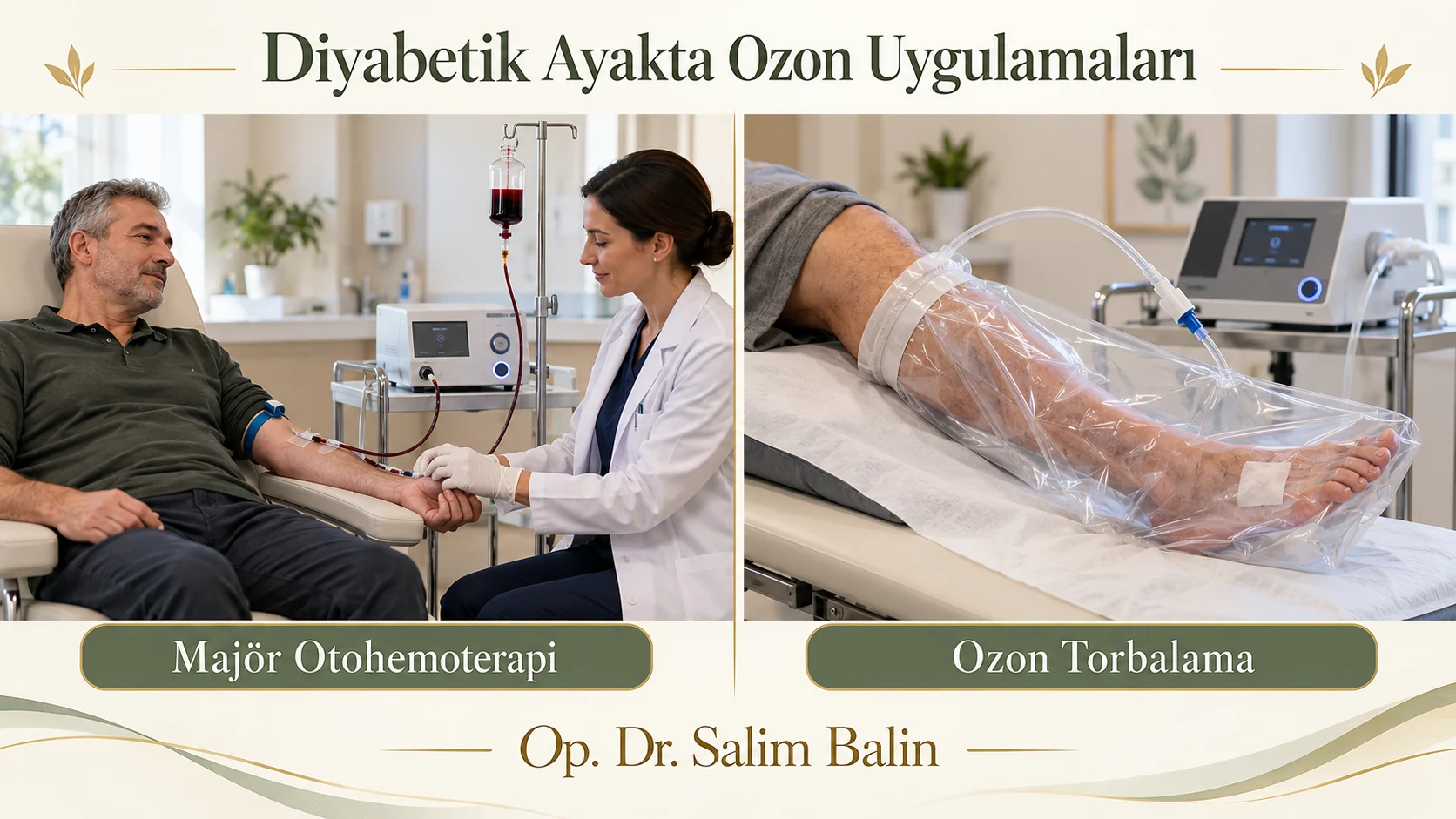
Ozone therapy is one of the methods considered in addition to standard treatments for diabetic foot wounds. Major autohaemotherapy and local ozone bagging are among the applications used for this purpose.
These applications are being researched for their possible effects on microorganisms in the wound, tissue oxygen use and healing processes. The decision to treat is made after a doctor assesses the wound and the patient’s general condition.
Ozone applications are supportive and complementary treatments that support core treatments such as vascular treatment, antibiotics, surgical debridement and reducing pressure on the foot, and increase their success.
In scientific studies, the results consistently support the use of ozone as a treatment for chronic wounds. (Fitzpatrick et al., Int Wound J, 2018)
Protecting Your Foot Health
- Check your feet and between your toes every day.
- Check inside your shoes before putting them on.
- Choose comfortable, protective shoes that fit your feet.
- Avoid walking barefoot.
- Do not neglect ingrown toenails, fungal infections or small wounds.
- Monitor your blood sugar regularly.
- Follow a personalised, healthy and balanced nutrition plan.
- Stop smoking.
Early diagnosis and timely intervention are very important in diabetic foot. Addressing regular wound care, adequate circulation, blood sugar control and appropriate nutrition together supports healing and helps prevent serious complications.
Diabetic foot and ozone therapy assessment in Ataşehir, Istanbul
At our clinic in Ataşehir, Istanbul, diabetic foot wounds are assessed individually, and treatment is planned by considering the wound together with the patient’s general health. For details of ozone applications, see our ozone therapy page and our articles ozone therapy in Ataşehir and ozone therapy: frequently asked questions.
Our clinic is at Atatürk Mahallesi, Ertuğrul Gazi Cad. No: 2H, Metropol İstanbul B Blok, Floor 18, No: 282, Ataşehir / Istanbul. Appointments for patients from Kadıköy, Ümraniye, Maltepe, Çekmeköy, Üsküdar and other parts of Istanbul are arranged by phone or WhatsApp. Address and directions
The clinic is in Atatürk Mahallesi, Ataşehir (Metropol İstanbul Block B), close to the Barbaros, İçerenköy, Küçükbakkalköy, Kayışdağı, Yenisahra and Ferhatpaşa neighbourhoods and to Kozyatağı, Bostancı, Göztepe and Erenköy in Kadıköy. Patients from Sancaktepe and Kartal are also welcome.
Frequently asked questions about diabetic foot and ozone therapy
Why does diabetic foot develop?
Three main factors play a role: nerve damage, circulation problems and infection. Ill-fitting shoes, ingrown toenails, fungal infections and smoking also increase the risk.
Which diabetic foot signs should you watch for?
Redness, swelling, increased warmth, cracks, blisters or a wound that does not heal need assessment. Discharge, a bad smell, new numbness and difficulty walking are also important signs.
Can a painless wound be dangerous?
Yes. Because of loss of sensation, a serious wound may be painless. So you should not rely on pain alone.
When should you seek emergency care?
If there is spreading redness, fever, chills, darkening of the skin, a cold foot or severe pain, seek emergency medical care.
How is ozone therapy used for diabetic foot?
Ozone therapy is one of the methods considered in addition to standard treatments for diabetic foot wounds. Major autohaemotherapy and local ozone bagging are among the applications used. The decision is made after a doctor assesses the wound and the patient’s general condition.
Does ozone therapy replace other treatments?
Ozone applications are supportive and complementary treatments that support core treatments such as vascular treatment, antibiotics, surgical debridement and reducing pressure on the foot, and increase their success.
How do blood sugar and nutrition affect wound healing?
Regular monitoring and control of blood sugar is one of the core parts of treatment. Adequate, balanced nutrition supports tissue repair and wound healing.
Where can diabetic foot be assessed in Ataşehir, Istanbul?
Assessments take place at Op. Dr. Salim Balin’s clinic at Atatürk Mahallesi, Ertuğrul Gazi Cad. No: 2H, Metropol İstanbul B Blok, Floor 18, No: 282, Ataşehir / Istanbul. For appointments, call or WhatsApp +90 506 520 30 55; opening hours are Monday–Saturday 09:00–18:00.
Related guides
Sources and further reading
Fitzpatrick E et al. Ozone therapy for the treatment of chronic wounds: A systematic review. Int Wound J. 2018;15(4):633–644 ↗Wen Q et al. A systematic review of ozone therapy for treating chronically refractory wounds and ulcers. Int Wound J. 2022;19(4):853–870 ↗Izadi M et al. Effect of ozone therapy on diabetes-related foot ulcer outcomes: A systematic review and meta-analysis. Curr Pharm Des. 2024;30(27):2152–2166 ↗Schaper NC et al. Practical guidelines on the prevention and management of diabetes-related foot disease (IWGDF 2023 update). Diabetes Metab Res Rev. 2024 ↗This content is for information only and does not replace medical advice. Please consult your doctor about your symptoms. The cover image is illustrative.
Ask me
Get in touch with your questions about diabetic foot, chronic wounds and ozone therapy, or to request an appointment.
💬 Ask me on WhatsApp — +90 506 520 30 55
✉️ Ask me by email — info@drsalimbalin.com
📍 We are at Metropol İstanbul Mall, in the best location in Ataşehir, Istanbul.
Metropol İstanbul Block B, Floor 18 · Ataşehir/Istanbul · Directions ↗