What Is Laser-Assisted Lipolysis (LAL) and What Does It Do? (Also Known as Endolaser)
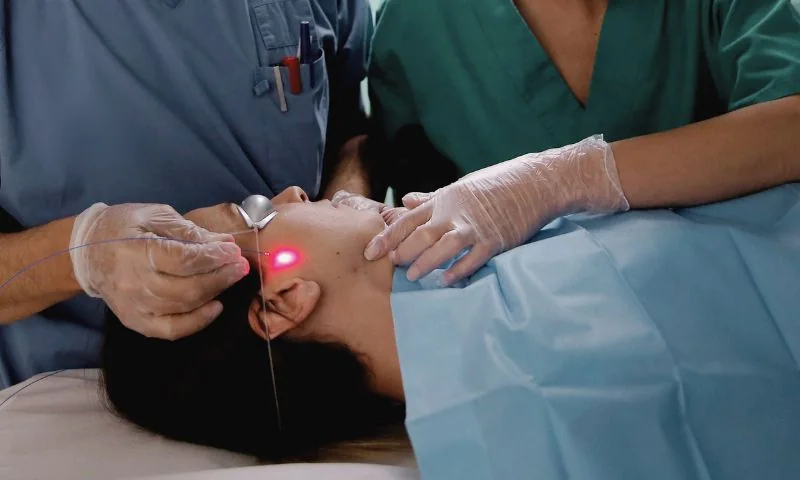
Short answer: Laser-assisted lipolysis (LAL) is a minimally invasive method in which laser energy is delivered directly under the skin through a thin optical fibre. It is also commonly called endolaser. The aim is to reduce limited local fat and support collagen remodelling under the skin to improve mild–moderate laxity. It is not a weight-loss method and does not replace a surgical lift when there is marked excess skin.
Why does it have different names?
In the medical literature the method is called laser-assisted lipolysis (LAL) or laser lipolysis. “Endolaser” describes laser delivered from inside (endo) the skin. Device manufacturers also use their own trade names; all are based on the same principle: delivering laser energy under the skin through a thin fibre.
How does LAL work?
- Effect on fat: Laser energy heats fat cells; damaged cells are gradually cleared by the body.
- Skin tightening: Heat stimulates the connective tissue under the skin and supports collagen remodelling over months.
- Effect on vessels: Small vessels are sealed by heat, helping to reduce bleeding and bruising.
Studies describe wavelengths between 924 and 1470 nm; wavelength and energy settings are chosen according to the area and goal.
Which areas can be treated?
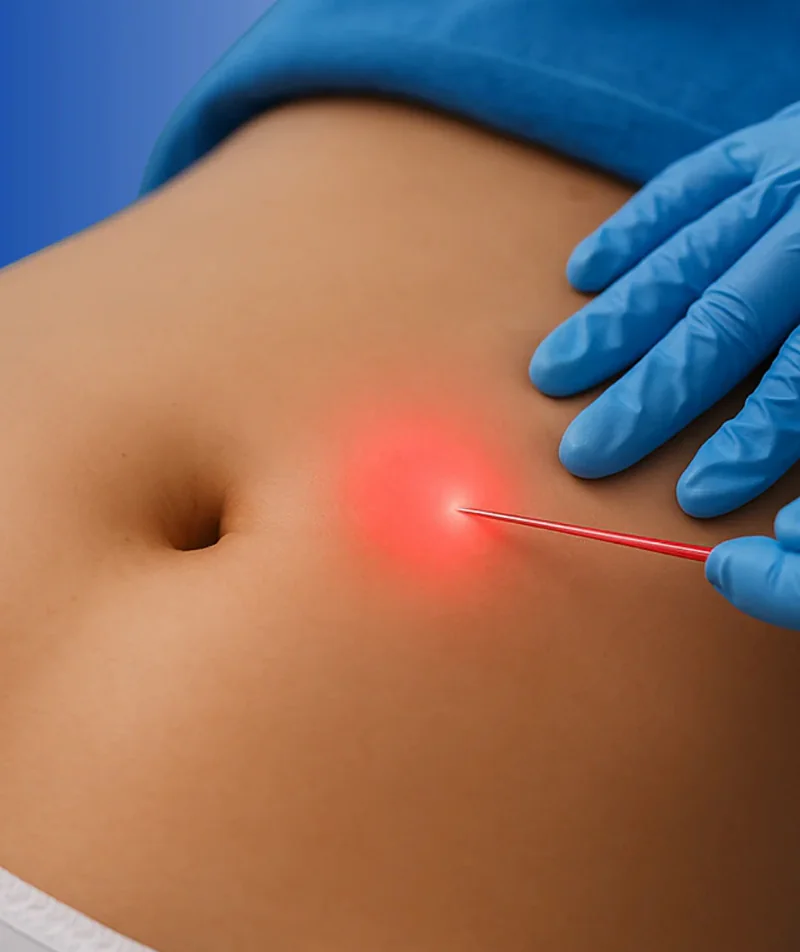
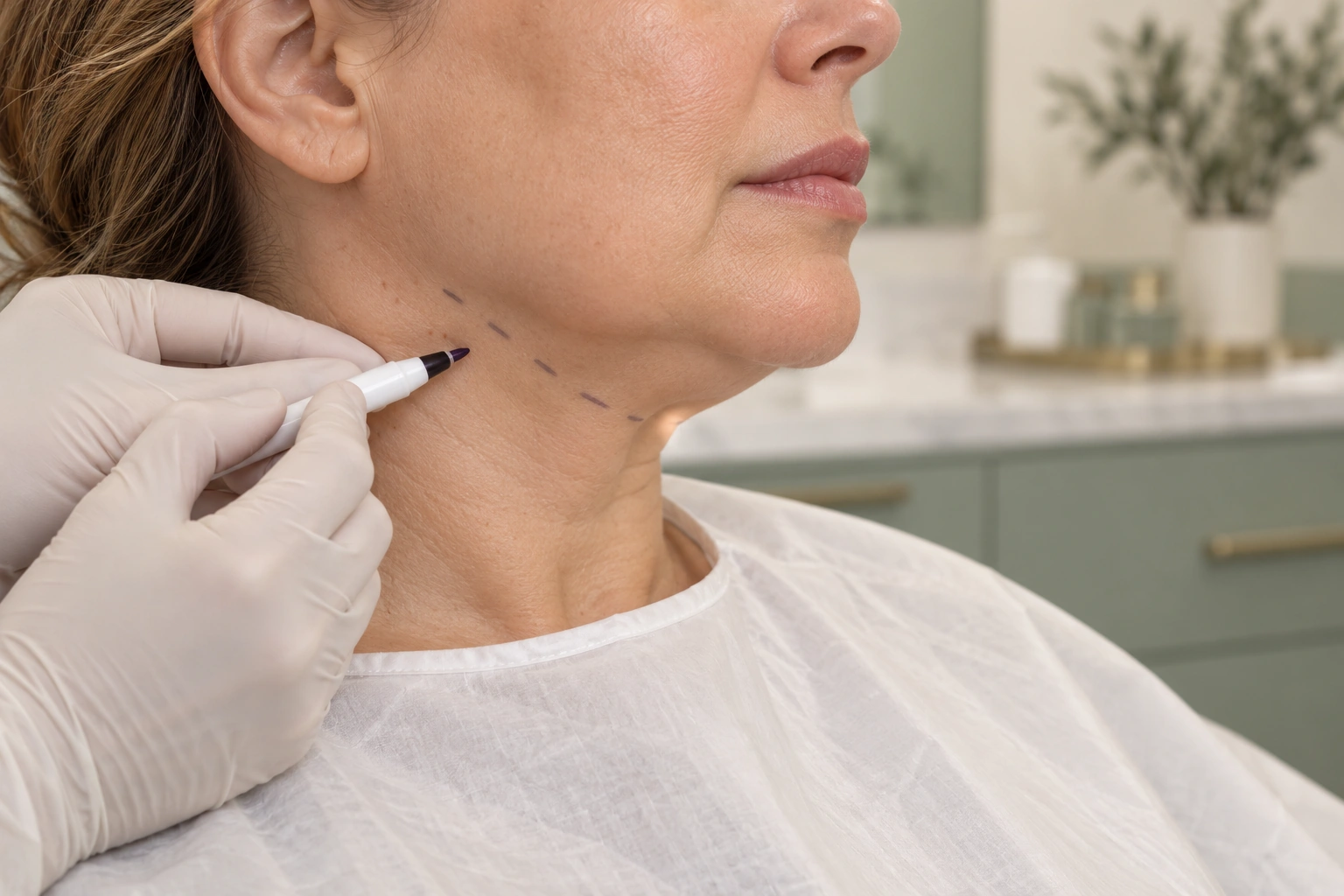
It is most often considered for the double chin, jawline and neck. It can also be used on the abdomen and waist, arms, inner thighs, above the knees and for gynaecomastia in men. It is also being studied as a supportive method in lipoedema. Area-specific information: double chin, abdomen and waist, lipoedema.
Who is it suitable for?
- People with a stable weight who still have limited fat in one area despite diet and exercise.
- People with mild–moderate skin laxity.
- Adults with realistic expectations who accept a gradual result.
When it may not be suitable: marked excess skin, active infection, pregnancy, uncontrolled chronic disease and bleeding disorders. If you take blood thinners, do not stop them on your own; this is discussed at consultation.
How does it differ from liposuction?
| Feature | Laser-assisted lipolysis (LAL) | Traditional liposuction |
|---|---|---|
| Anaesthesia | Usually local | Usually general or sedation |
| Goal | Limited fat and skin tightening | Removing larger amounts of fat by suction |
| Incisions | Millimetre-sized entry points | More entry points |
| Recovery | A few days to 1 week | Longer |
When needed, laser and fat aspiration can be combined in the same session; the scope and recovery then change.

Recovery and results
Swelling, mild bruising and tenderness are expected in the first days; most people return to desk work within a few days. Compression is worn for the recommended period. Because collagen remodelling takes time, the final result is usually assessed at 3–6 months.
Possible risks: swelling, bruising, temporary numbness, firmness, irregularities and, rarely, burns or nerve involvement. Seek review without waiting for your appointment if pain increases, redness spreads, or you develop fever or blistering.

Frequently asked questions
Are endolaser and laser-assisted lipolysis the same?
Yes. Laser-assisted lipolysis is the medical name; endolaser is the commonly used name.
How many sessions are needed?
Most areas need a single session; the need for another is assessed at the 3–6-month check.
Are the results permanent?
Removed fat cells do not come back, but ageing and weight changes continue to affect the skin.
Does it cause weight loss?
No. It is a body-contouring method; other options are considered for weight management.
Related guides
Further reading
Laser-assisted lipolysis: a reviewLAL versus traditional liposuction: systematic review (2017)Laser-Assisted Lipolysis: A Promising Alternative to Traditional LiposuctionGeneral patient information. Individual treatment is planned in consultation.