What is a pilonidal sinus? Symptoms, causes and treatment options
Short answer: A pilonidal sinus is a condition, usually at the tailbone in the cleft between the buttocks, where loose hairs enter the skin and cause discharge, pain, swelling and recurrent abscesses. Diagnosis is usually made by examination. Treatment options include crystallized phenol, laser, flap techniques when needed and drainage for an abscess; the method is chosen individually based on how extensive the tracts are, whether there is an abscess and previous treatments. No method guarantees it will not recur.

What is a pilonidal sinus?
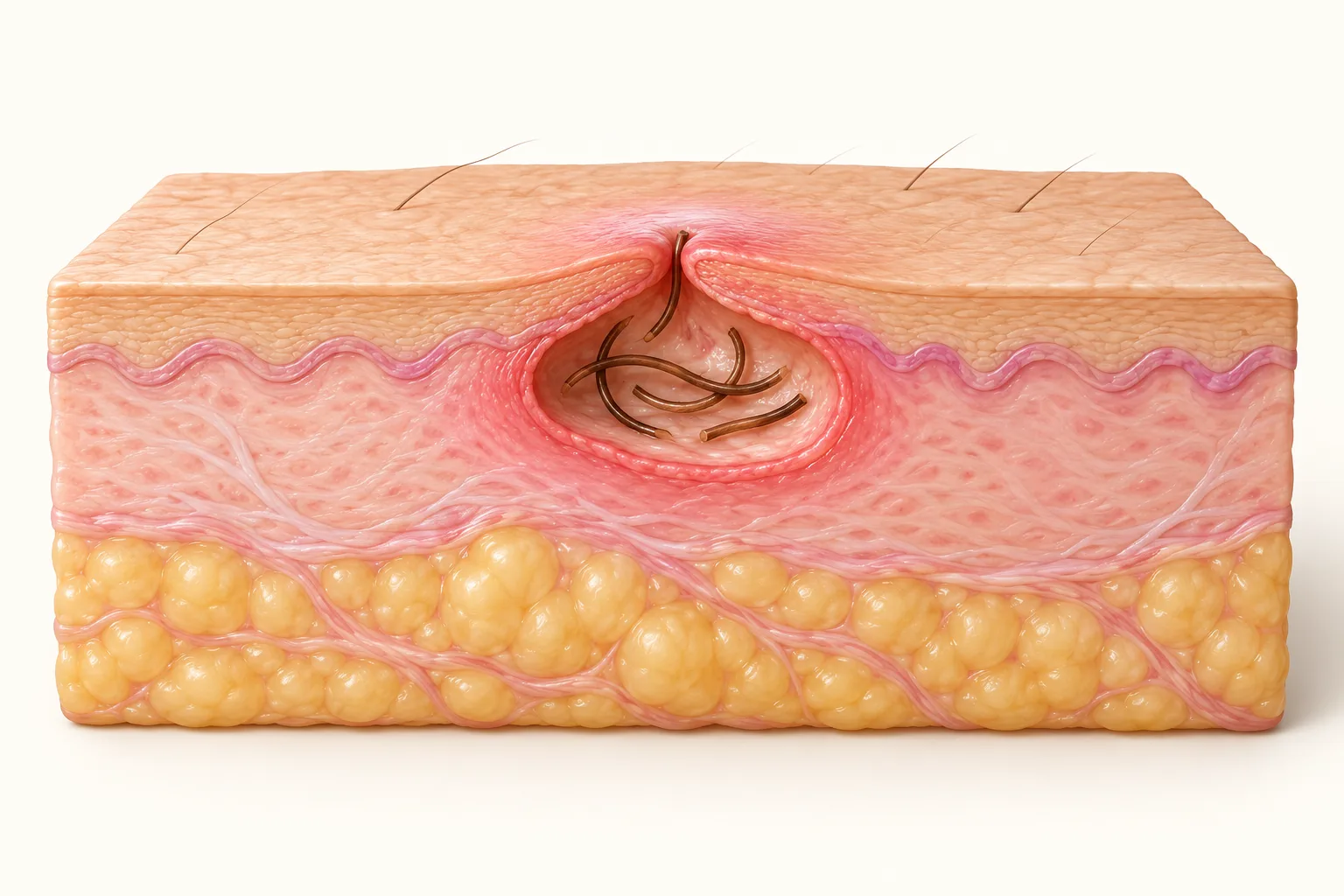
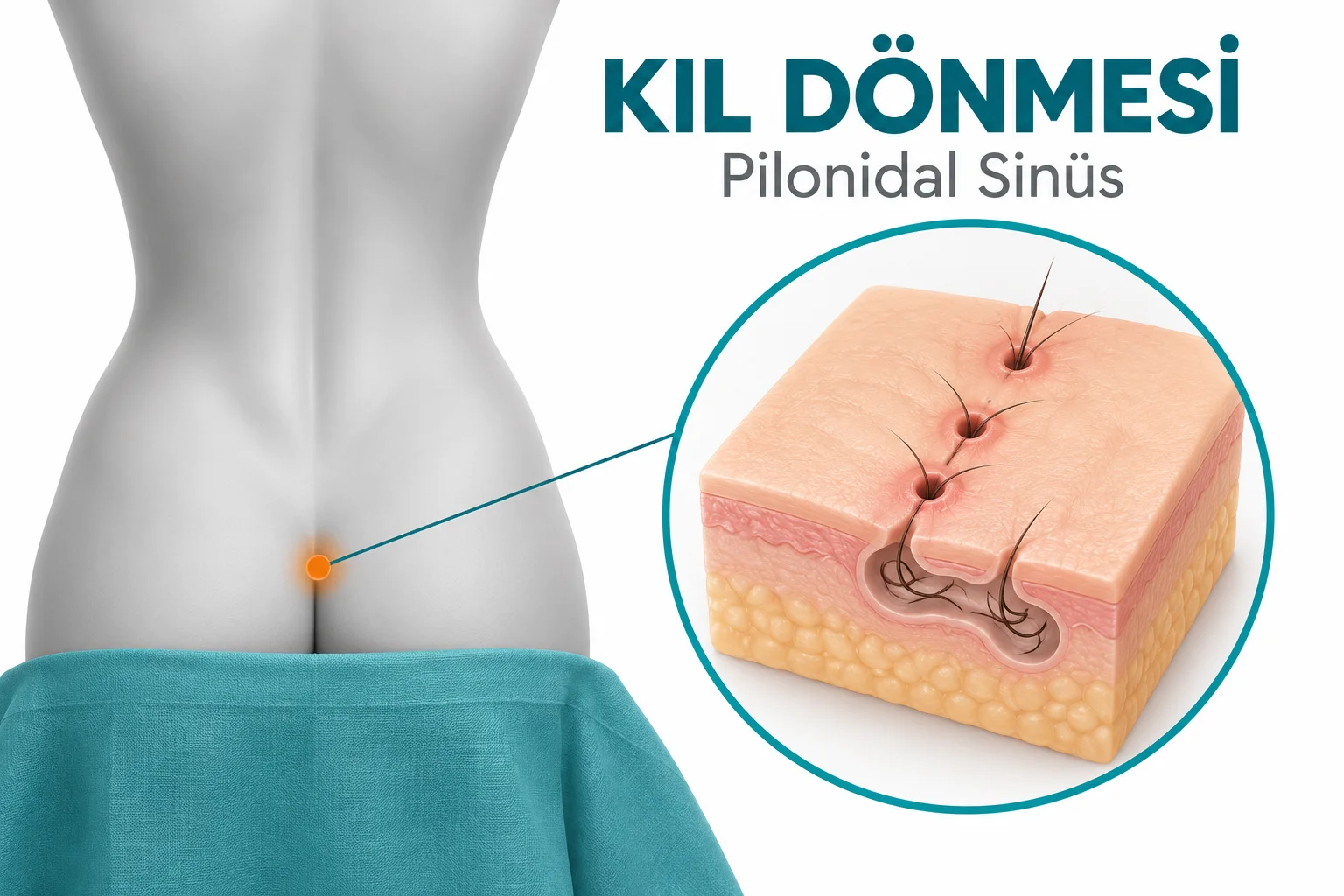
A pilonidal sinus usually forms at the tailbone, in the cleft between the buttocks. Loose hairs entering the skin cause a foreign-body reaction, and cavities and tracts can develop under the skin, leading over time to discharge, inflammation and abscess. Treatment is planned individually according to the extent of disease, whether an abscess is present and previous procedures.
What are the symptoms?
- Pain and tenderness at the tailbone
- Swelling and redness
- Discharge staining underwear
- Occasional bad smell
- Small pits in the skin
- Recurrent abscess and inflammation
Some people have only small pits; others develop a painful abscess that makes sitting difficult.
Why does it happen?
Hairs collecting in the cleft can work their way into the skin through friction and pressure; the body's reaction leads to inflammation and sinus tracts. It is not only a hygiene problem – local anatomy, hair characteristics and personal susceptibility also play a role.
What are the risk factors?
Heavy hair growth, a deep natal cleft, excess weight, long periods of sitting, sweating, friction and family history. In people who sit for long hours, moisture and constant pressure can worsen symptoms.
How is it diagnosed?
Usually from symptoms and physical examination of the pits, discharge and swelling. Imaging is not always needed; ultrasound or MRI may be requested in recurrent or extensive cases or when it may be confused with other perianal conditions.
What are the treatment options?
The choice depends on the number and extent of tracts, an active abscess, previous treatments and daily life:
- Crystallized phenol
- Laser treatment
- Flap techniques when needed
- Drainage for an abscess
No method suits everyone. The aim is to control the disease while preserving healthy tissue and reducing recurrence. See also how to choose between laser, phenol and surgery.
Crystallized phenol treatment
Crystallized phenol can be used in suitable patients without a large surgical incision, especially in limited disease without an active abscess. Under local anaesthesia, hairs and debris are cleared, surrounding skin is protected and phenol is applied in a controlled way to the cavity and tracts to help them close. One application may be enough for some; others need repeats. Advantages can include no large tissue removal and a quicker return to daily life, but success is not guaranteed, and because phenol contact can irritate or burn the skin it should be applied by an experienced doctor. See crystallized phenol for pilonidal sinus.
Laser treatment
Hairs and debris in the tracts are cleared, then a thin laser fibre delivers controlled energy to the tract lining so that it shrinks and closes. In suitable patients it is done through small openings, avoiding a large wound, but people with many branching tracts, large cavities or an active abscess may not be suitable. Laser sinus treatment is different from laser hair removal, which reduces hair in the area. Read about the laser procedure day and recovery after laser.
Flap techniques
In extensive, complex or recurrent disease, flap techniques may be considered: after treating the diseased area, nearby healthy tissue is used to close the wound, moving the scar away from the midline and flattening the cleft.
Recovery and care
Recovery depends on the method, the extent of disease and individual healing. Do dressings as advised, keep the area clean and dry, prevent loose hairs collecting, attend follow-ups and follow personal advice on sitting, exercise and returning to work. Contact your doctor if pain, redness, swelling, fever or foul-smelling discharge increase.
Does a pilonidal sinus recur?
It can recur after any treatment. The risk depends not only on aftercare but also on extent of disease, anatomy, the method used and wound healing. Keeping the area clean and dry, preventing hair build-up and doctor-recommended hair control are part of aftercare.
What to do if it becomes inflamed
Rapidly increasing pain, swelling, redness or fever may mean an abscess; see a doctor. The main treatment for an acute abscess is usually drainage. Antibiotics may be added for spreading infection or systemic signs but may not be enough alone. Definitive treatment is considered once the abscess is controlled.
Pilonidal sinus treatment in Ataşehir, Istanbul
At our clinic in Ataşehir, Istanbul, we examine the number and extent of tracts, any abscess and previous treatments, then plan phenol, laser or surgical options together. See also 15 common questions about pilonidal sinus.
The clinic is in Atatürk Mahallesi, Ataşehir, in Metropol İstanbul Block B. Besides the Barbaros, İçerenköy, Küçükbakkalköy, Kayışdağı, Yenisahra and Ferhatpaşa neighbourhoods of Ataşehir, we see patients from Kadıköy (Kozyatağı, Bostancı, Göztepe, Erenköy), Ümraniye, Maltepe, Çekmeköy, Sancaktepe, Üsküdar, Kartal and other districts of Istanbul.
Frequently asked questions
Does a pilonidal sinus go away on its own?
Discharge or pain may ease at times, but the tracts under the skin can persist; symptom relief does not mean the disease has healed.
Is surgery always needed?
No. Crystallized phenol or laser may be suitable for some patients; flap techniques may be needed in extensive or recurrent disease. The decision depends on examination.
Is phenol or laser better?
No single method is best for everyone; the extent and structure of tracts, abscess and previous treatments guide the choice.
Does crystallized phenol work in one session?
One application may be enough for some patients; others need more than one depending on healing.
Does laser cure a pilonidal sinus completely?
It can heal well-selected patients, but no method can guarantee success or no recurrence for everyone.
Is a pilonidal sinus painful?
Yes, especially with inflammation or abscess. In chronic disease there may be discharge without pain.
Can it be mistaken for a pimple?
Yes. A small swelling or draining pit may first look like a pimple; recurrent swelling, discharge or pain in the same area should be checked by a general surgeon.
Sources and further reading
Johnson EK et al. The American Society of Colon and Rectal Surgeons clinical practice guidelines for the management of pilonidal disease. Dis Colon Rectum. 2019 ↗This content is for information only and is not medical advice. See your doctor about your symptoms.
Ask me
Get in touch with your questions about this topic or to request an appointment.
💬 Ask me on WhatsApp — +90 506 520 30 55
✉️ Ask me by email — info@drsalimbalin.com
📍 We are at Metropol İstanbul Mall, in the best location in Ataşehir, Istanbul.
Metropol İstanbul Block B, Floor 18 · Ataşehir/Istanbul · Directions ↗